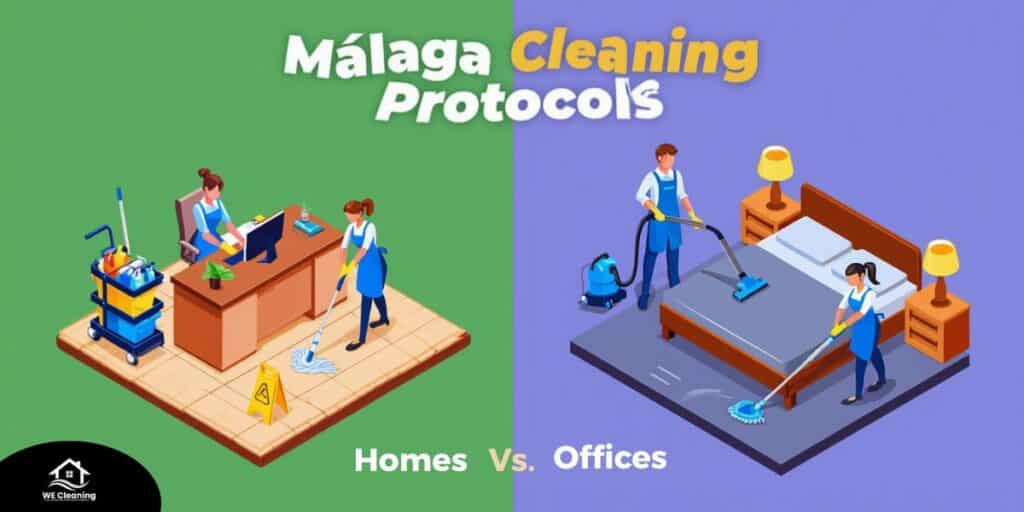
In the sunny Costa del Sol, keeping a clean environment requires more than just a quick sweep or mop. If you have an office or a home in Málaga, it’s important to know the cleaning protocols for each type of space. Understanding these differences also helps when choosing the right cleaning service for your needs.
While both settings aim for tidiness, the methods, legal requirements, and frequencies differ significantly. This guide explores the analytical differences between residential and commercial cleaning standards in the Málaga province.
What Is a Cleaning Protocol?
A cleaning protocol is a clear plan that explains how to keep a space clean. It’s more than just a list of tasks; it serves a specific purpose. A good protocol includes the following:
- A checklist for tasks
- Products for specific surfaces, including choosing between pH-neutral vs acidic cleaners
- How often to clean
- Standards for cleanliness and hygiene
- The exact chemicals to use
- Required safety measures
These protocols ensure that cleaning is consistent. They help monitor performance and make sure every part of a building meets health standards.
💡 Cleaning Help: Whether you want a custom checklist for your home or a thorough cleaning protocol for your office, WE Cleaning offers expert services across the Costa del Sol, including Mijas, Marbella, and Fuengirola.
Málaga Residential Cleaning Protocols (Homes & Apartments)
Residential cleaning in the Costa del Sol is deeply personal. It focuses on creating a comfortable space that can handle the unique challenges of southern Spain.
✅ Climate Considerations
The Mediterranean climate brings specific cleaning challenges, especially when you understand how coastal climate affects home cleanliness. Homes along the coast deal with high humidity and salt air, which can quickly damage fixtures and encourage mold growth in shady areas. Protocols here prioritize regular ventilation, moisture control, and the use of anti-fungal cleaning agents to protect property value.
✅ Primary Focus Areas
In a home, the protocol focuses on “high-touch” areas. This includes deep cleaning upholstery, sanitizing kitchen surfaces, and caring for the beautiful marble floors common in local homes. Unlike offices, house cleaning prioritizes removing household allergens like pet dander and dust mites, which is one reason why coastal homes still feel dusty after cleaning.
✅ Cleaning Frequency
Most households in Málaga follow a weekly or bi-weekly cleaning schedule. For “end of tenancy” or move-in/move-out services, protocol shifts to a one-time deep clean that covers every inch, including inside cabinets and behind appliances.
✅ Tools & Product Approach
Home protocols favor pH-neutral cleaners, family-friendly, and often biodegradable products. Since the environment is private, the equipment is usually quieter and more compact, such as HEPA-filter vacuums that capture fine Saharan dust without disturbing the peace in residential neighborhoods.
Office & Commercial Cleaning Protocols in Málaga
Cleaning commercial spaces requires a strong and organized approach. The focus is on public health, employee productivity, and maintaining a good brand image.
✅ Higher Foot Traffic & Usage
Offices in Mijas and Fuengirola see many footprints daily. That’s why these commercial spaces need a protocol to deal with dirt that gets tracked in and the quick buildup of germs in shared areas, like kitchens, printer rooms, and lobbies.
👉 Explore the differences between residential and commercial cleaning methods.
✅ Hygiene & Compliance Standards
Commercial cleaning must follow strict safety rules. Offices have to meet Occupational Risk Prevention (Prevención de Riesgos Laborales) standards set by the Spanish Ministry of Labor. Employers must ensure a safe and clean environment to prevent workplace hazards. This includes using hospital-grade disinfectants and keeping documented cleaning logs for inspections. Maintaining this standard highlights the benefits of professional cleaning services for businesses.
✅ Frequency and Timing
To avoid disrupting the Málaga business rhythm, office cleaning usually happens outside of regular hours. Cleaning is typically scheduled for late evening or early morning. Busy offices may need a “day porter” service, where a cleaner is present during business hours to keep restrooms and common areas clean. This is increasingly common due to the growing demand for professional cleaning in Costa del Sol.
✅ Equipment & Process Differences
Offices use heavy-duty cleaning equipment. This includes HEPA-filter vacuums to improve air quality and high-speed floor buffers for large areas. Cleaners follow a more organized approach.
They use color-coded systems (for example, red for restrooms and blue for desks) to avoid cross-contamination. This method is stricter than typical home cleaning practices. In some cases, post-renovation offices may require post-construction cleaning services before regular maintenance begins.
Specialized Protocols in Málaga
Some cleaning challenges are unique to this part of Spain. These specialized methods set professional cleaning services apart from basic options.
✔️ The “Calima” Protocol: A Local Necessity
The Calima is a weather event where dust from the Sahara covers Málaga in orange dust. This situation requires an emergency cleaning plan. When a Calima occurs, regular cleaning methods won’t work, and deep cleaning after Calima becomes essential.
- For Homes: The focus is on sealing entries and then using low-pressure water to “wash” rather than “wipe” surfaces to avoid scratching delicate finishes.
- For Offices: The protocol involves immediate HVAC filter inspections. The fine dust can clog air conditioning systems, which can lead to costly repairs and poor air quality for employees.
➤ In severe cases, exterior surfaces may require professional facade cleaning services to fully remove embedded dust and stains.
✔️ Legal and Health Regulations in Andalusia
In Andalusia, businesses must follow specific health and safety rules. For instance, if an office has a canteen, it must comply with strict food safety standards set by the Junta de Andalucía. It also must follow the Ley de Prevención de Riesgos Laborales, which protects both the business owner and the cleaning staff. In the residential sector, the new Royal Decree 893/2024 requires even private households to carry out a basic risk assessment for cleaning staff.
Key Differences at a Glance (Summary Table)
Feature | Residential Protocol | Office/Commercial Protocol |
Primary Goal | Personal comfort & allergen reduction | Public health & business image |
Key Regulation | Royal Decree 893/2024 (Basic) | Prevención de Riesgos Laborales (Strict) |
Average Frequency | Weekly or Bi-weekly | Daily (After hours) |
Focus Areas | Kitchens, Bedding, Living areas | Workstations, Lobbies, Shared toilets |
Equipment | Quiet, HEPA-filter vacuums | Industrial scrubbers & steam tools |
FAQs About Málaga Cleaning Protocols
Do offices in Málaga require daily cleaning protocols?
Yes. Most businesses in Málaga need daily cleaning to handle high foot traffic and keep restrooms and common areas clean and welcoming for clients.
How does Calima dust impact office environments differently from homes?
In homes, Calima dust is mostly a visual issue that affects outdoor maintenance. In offices, it can create problems. The fine dust can get into server rooms and sensitive electronics, so offices need to focus on air filtration and dusting to protect their equipment.
How often should deep cleaning be scheduled for Málaga offices and homes?
Homes should have a deep clean every 3 to 6 months. Offices should schedule a “High-Intensity Deep Clean” at least once a quarter to clean carpets, upholstery, and hard-to-reach vents.
What are the legal hygiene expectations for commercial cleaning in Spain?
Spanish law says businesses must provide a safe and healthy workplace. The National Institute for Occupational Safety and Health (NIOSH) requires businesses to have cleaning practices that remove biological risks and ensure all cleaning staff are trained in using chemicals safely.
Can improper cleaning protocols affect workplace productivity?
Absolutely. A study by the World Green Building Council found that better indoor air quality and cleanliness can boost productivity by 10%. On the other hand, poor hygiene can lead to more sick days, which reinforces how professional cleaning protects coastal properties.