Many homeowners on the Costa del Sol struggle with stubborn limescale and salt buildup on their fixtures. Cleaning these messes can feel like an endless battle against the Mediterranean elements. This is especially true for homeowners who don’t fully understand how the coastal climate affects home cleanliness over time.
But the good news is that there are scientific solutions to make your house shine and protect your surfaces for years. These are Acidic Cleaners that are a game-changer for Coastal home cleaning.
In this guide, we will explore what acidic cleaners are, why they are necessary in Málaga’s environment, and which surfaces benefit the most from using them. So, keep reading to learn more.
What Are Acidic Cleaners?
Acidic cleaners are cleaning agents with a pH level lower than 7. While alkaline cleaners (bleach) work well on grease and oils, acidic cleaners are made to remove hard deposits like limescale. These products typically contain ingredients such as citric, phosphoric, or hydrochloric acid, depending on how strong they need to be. They break the bond between mineral deposits and your surfaces, making it easier to wipe away tough stains that other cleaners can’t remove.
💡 Expert Recommendation: To compare cleaning product details, you can read our blog on “pH-Neutral vs Acidic Cleaners – What Works Best?“
Why Do Mediterranean Homes Need Acidic Cleaning?
Living on the Costa del Sol is lovely, but the local climate creates unique cleaning challenges. Standard cleaning methods often don’t work well because they don’t tackle the specific issues caused by the local environment.
1. Hard Water Reality in Málaga & Coast
According to data from the Spanish Ministry of Health (SINAC), the Mediterranean coastline often records calcium carbonate levels exceeding 200mg/L, classifying it as “very hard” water. This means it has high levels of minerals like calcium and magnesium. Areas like Mijas and Marbella have much harder water than northern regions. When this water evaporates from your tiles or glass, it leaves a tough white residue that only an acidic solution can remove.
2. Sea Salt & Humidity Buildup
Living near the sea means the air includes salt spray. This salt, combined with high humidity, creates a sticky and damaging layer on windows and metal parts. If you don’t clean properly, this salt can permanently damage your home’s exterior. Only a professional cleaning can help protect your coastal property.
3. Frequent Limescale Buildup
Because we use water constantly in kitchens and bathrooms, limescale (calcium carbonate) accumulates rapidly. Over time, this buildup blocks showerheads and makes faucets look dull and old. Acidic solutions are the only way to dissolve these layers without scratching the underlying metal.
4. Saharan Dust (Calima)
The Calima is a weather event where dust from the Sahara Desert settles over the Costa del Sol. This dust is not just ordinary dirt; it is rich in minerals and can become slightly alkaline when mixed with rain. It sticks to walls and terraces, requiring specialized façade cleaning methods with acidic agents to restore the original color of the stone or paint.
5. Ineffectiveness of Standard Cleaners
Many homeowners try to use multi-purpose sprays found in local supermarkets. However, most of these products are slightly alkaline. They might remove fingerprints, but cannot break the mineral bond of stains. Using the wrong cleaner often leads to frustration and wasted effort. This is why professional cleaning requires a more scientific approach.
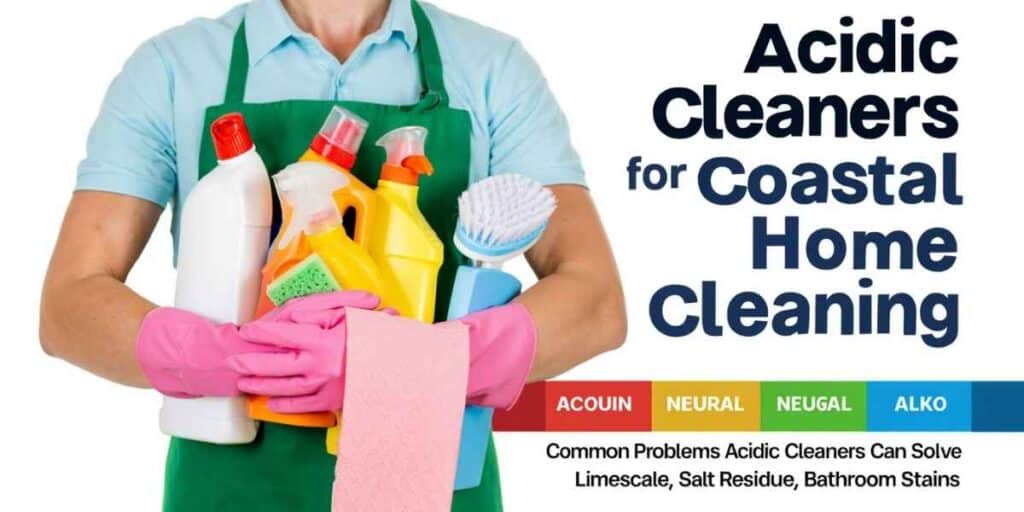
Common Problems Acidic Cleaners Can Solve
Knowing when to use acid-based cleaners can save you time and effort. Here’s how these cleaners can help with common Costa del Sol household issues.
✅ Hard Water Stains in Bathrooms
Have you noticed white, cloudy spots on your bathroom wall tiles? These are “water spots” caused by mineral deposits. Acidic cleaners melt these spots away and restore the shine to your ceramics, making your bathroom look like new.
✅ Limescale on Shower Screens and Taps
A common complaint for homeowners in Marbella and Mijas is the “foggy” appearance of glass shower doors. This often happens due to limescale and soap scum buildup. A professional acidic treatment clears the glass completely, which a regular glass cleaner cannot do.
✅ Salt Residue on Coastal Properties
For beachfront villas, salt air can make stainless steel railings and windows look rusty or dull. Acidic solutions can help by removing salt and restoring the protective layer on the metal, making window cleaning easier in coastal areas.
Surfaces That Benefit From Acidic Cleaning
When used correctly, acidic cleaning products can be very effective in many parts of your home. However, they are not suitable for all surfaces. These cleaners work best on durable, non-porous materials. Here are some surfaces that benefit from acidic solutions:
- Shower Glass & Mirrors: Acids easily remove the mineral fog that builds up from daily use.
- Chrome Taps and Fixtures: Acids restore the shiny finish to your plumbing fixtures.
- Ceramic & Porcelain Tiles: These are resistant to mild acids and benefit greatly from the removal of greyish mineral films.
- Outdoor Terraces & Pool Areas: Acids help remove “efflorescence” (white salt leaching) from terracotta or clay tiles, which is very common in Spanish architecture.
Surfaces Where Acidic Cleaners Can Be Risky
As an expert residential cleaning company, we always advise our clients to be careful when using acid cleaners, as they can damage certain materials. In Spain, many houses use natural stone, which can be ruined by acid. Here are the surfaces that you should avoid using acidic cleaners on:
✔️ Marble and Natural Stone
Never use acid on marble. Many homes in Costa del Sol have beautiful cream marble floors. Acid will damage the calcium in the stone, leaving a dull mark called etching.
For marble and stone, pH-neutral cleaning products work best.
✔️ Limestone & Travertine
Like marble, these stones react strongly to acids. Even a small spill from a lemon-based cleaner can cause visible damage very quickly.
✔️ Certain Sealed Surfaces
Some modern synthetic stones or specially coated metals can also be harmed by strong acids. If the protective coating is removed, the material underneath can get stained.
How Professionals Use Acidic Cleaners Safely
At WE Cleaning, we prioritize safety to keep your house clean without causing any damage. We always use a house cleaning checklist to ensure a room-by-room cleanup.
✔️ Pre-inspection of surfaces
We always identify the material first. We test a small, hidden area to ensure no negative reaction occurs.
✔️ Correct pH selection
We select a cleaning solution with the mildest possible pH that is still effective. This helps protect your fixtures while achieving a professional result.
✔️ Neutralizing & rinsing steps
This is a vital step many DIYers skip. After cleaning, we rinse the area thoroughly to stop the chemical reaction and return the surface to a neutral pH.
✔️ Post-clean sealing (if needed)
Once a surface is deep-cleaned with an acid, it can sometimes be more porous. For outdoor areas, we often recommend a professional sealer as part of exterior or post-construction cleaning.
👉 Expert Recommendation: Learn the benefits of hiring a professional cleaning company.
When Should You Book Professional Help?
While you can do some basic cleaning at home, certain situations require the expertise of a professional team.
1️⃣ Heavy limescale buildup
If your taps are covered in mineral deposits, DIY products may not be strong enough to clean them.
2️⃣ Cloudy shower glass
If your glass remains cloudy after a regular wipe-down, it probably needs professional acidic cleaning.
3️⃣ Salt corrosion signs
If your metal fixtures show signs of pitting, you need a professional to stop the damage.
4️⃣ Expensive surfaces at risk
If you have high-end finishes and aren’t sure which chemical to use, hiring a professional is often cheaper than replacing a damaged floor.
Acidic Cleaning for Costa del Sol Homes – Final Thoughts
Acidic cleaners are not just “extra” products; they are essential for keeping houses well-maintained in the Málaga region. By understanding the science of hard water, salt, and Calima, you can keep your property in top condition. However, these cleaners can harm marble and other stones, so it’s important to be careful. Consider hiring experts who know about local architecture.
👉 Expert Recommendation: Learn how to choose the right cleaning service.
FAQs About Acidic Cleaners
Are acidic cleaners better than alkaline cleaners?
Neither is “better”; they serve different purposes. Alkaline cleaners are great for removing grease, oils, and food spills, which are common in kitchens. Acidic cleaners help remove minerals, limescale, and salt, often found in bathrooms and outdoors. For a Mediterranean home, you need both in your cleaning kit.
Is acidic cleaning better done by professionals?
Yes, especially for tough buildup. Professionals like WE Cleaning know how long to let the cleaner work and how to mix it safely for different surfaces without damaging delicate Spanish stone or metal.
Does acidic cleaning help prevent long-term damage?
Yes. It removes salt and limescale, preventing “pitting” and etching that can cost you thousands of Euros in house repairs over time.
Can acidic cleaners remove Calima dust stains?
Yes, Calima dust creates a mineral film on surfaces. A mild acidic cleaner can break this bond better than just using high-pressure water.
How often should acidic cleaning be done?
In the Costa del Sol, we suggest a deep acidic clean for bathrooms every 3 to 6 months to manage hard water buildup.
Can acidic cleaners damage surfaces?
Yes, if left on too long or used on “calcitic” stones like marble, limestone, or travertine. They can cause permanent dull spots or “burns” on the stone.
Are acidic cleaners safe for bathroom and kitchen use?
They are generally safe for ceramic, porcelain, and glass. However, use them cautiously around kitchen countertops made of natural stone.
Can acidic cleaners damage toilet bowls?
Most porcelain toilets can handle acids, which help remove “urine scale” and water rings. Just make sure the cleaner doesn’t sit on plastic seats or metal hinges for too long.
Is vinegar an acidic cleaner?
Yes, white vinegar contains acetic acid (about 5%). It works as a safe home remedy for light stains, but it might not be strong enough for heavy limescale in Málaga’s hard water.