
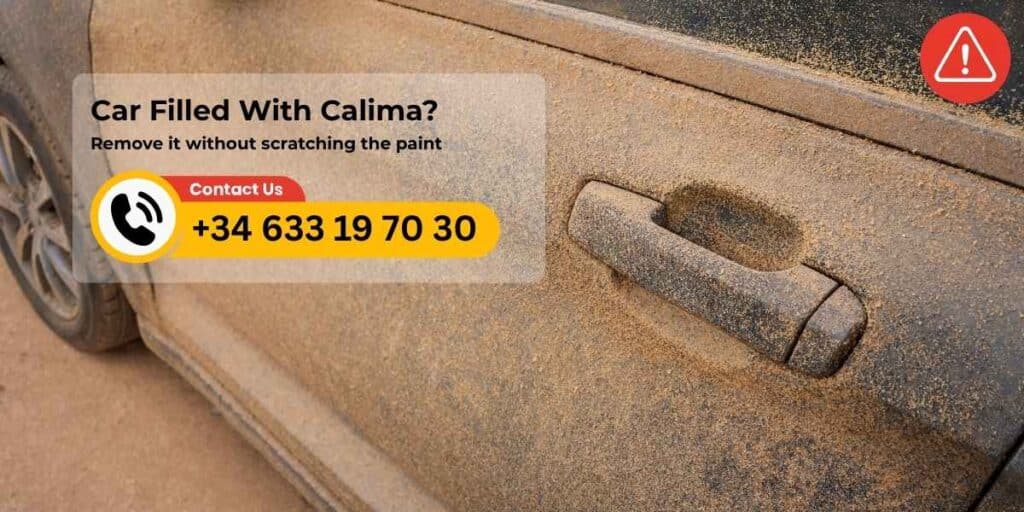
Waking up on the Costa del Sol to find your vehicle covered in a fine layer of orange atmospheric dust, locally called calima, is common in Málaga Province. However, trying to clean it off incorrectly can scratch your paint.
Rubbing or scrubbing the contaminated clear coat can cause costly damage. If you are wondering how to remove Saharan dust without scratching paint, you are not alone.
Thankfully, you can clean your car safely by using the right pre-wash techniques and lubricants. This guide explains how dust can scratch paint, how to prepare for washing, the steps for washing your car, drying tips, and mistakes to avoid. So, keep reading to learn more, or you can simply call WE Cleaning for complete car washing services right at your location in Costa del Sol.
Why Saharan Dust Can Scratch Vehicle Paint
Saharan dust, which comes from North Africa, is different from regular dirt and pollen. It has tiny mineral particles that can really harm your car’s paint. Here’s why:
- Mineral Composition: Calima dust contains fine quartz, silica, and mineral crystals.
- Hardness Mismatch: Quartz is harder than the clear coat on your car. On the Mohs hardness scale, quartz is rated at 7.0, while the clear coat ranges from 2.5 to 3.5.
- Friction Drag: Rubbing dry dust drags hard silica across the softer clear coat, acting like fine sandpaper.
- Clear Coat Damage: This abrasion can create swirl marks, micro-marring, and fine scratches, which dull your paint over time.
How Calima Dust Settles on Vehicle Surfaces
During a haze event, dust from the atmosphere settles evenly on all exposed surfaces of a vehicle, including the hood, side glass, plastic parts, and rubber seals. When high-altitude dust meets coastal humidity or light rain, it creates thick mud deposits (lluvia de barro). Understanding the behavior of these particulate layers is essential when surviving Calima season on the Costa del Sol without damaging your car’s finish.
Why Dry Wiping Creates Unnecessary Friction
A dry towel or duster has little lubrication between the material and the paint. When it moves across a dusty panel, it can carry retained particles along the surface.
Avoid writing in the dust with a finger, brushing it away by hand, or using a dry microfibre cloth for a quick cosmetic clean. Even a soft cloth can cause marks if grit becomes trapped in it.
What to Do Before You Touch a Dusty Car
Before you choose a cleaning method for your vehicle, do a quick inspection. Check for the following:
- The type of deposit: is it light, heavy, loose, muddy, or dried on?
- The temperature of the body panels: do they feel hot?
- The condition of the paint: are there chips, peeling spots, repairs, or other defects?
- Your supplies: do you have enough clean water and the right washing equipment?
- Additional contaminants: are there bird droppings, tree sap, or road grime?
- Local rules: is washing allowed in your location?
If you find delicate finishes, damaged paint, or thick deposits, it may be best to seek professional vehicle washing services.
Let Hot Body Panels Cool Down
Washing your vehicle in hot Southern Spanish sunlight or on hot body panels makes water and cleaning products evaporate quickly. This flash evaporation can trap hard water minerals and dust on the paint, which can damage the surface.
Move the car into shade where practical. Alternatively, wash it during a cooler part of the day. Do not apply a pre-wash product if it is likely to dry before you can rinse it away.
Check Whether the Dust Is Dry or Muddy
Dry dust lies loosely on horizontal panels and can often be removed with high-pressure water. However, dried mud sticks firmly to the clear coat. Heavier, baked-on mud needs soaking and special cleaning agents before you can safely touch the surface
Do not test hardened residue by rubbing it with a finger. If it does not release during the initial rinse, soften it further instead of applying more pressure.
Safest Way to Remove Saharan Dust From Paint
To clean a car covered in Saharan dust, follow these steps to avoid scratching the paint.
Step 1: Remove Loose Dust With a Gentle Rinse
➤ Start by rinsing your car without touching it. Use a pressure washer with a 40-degree nozzle, keeping it at least 30 centimeters away from the car.
➤ Rinse from the roof down to remove up to 80% of the loose dust. If you prefer professional help, look for car detailing services that handle this type of cleaning.
👉 Drivers seeking professional assistance can explore dedicated car exterior cleaning services to handle heavy contamination safely.
Step 2: Pre-Wash Heavily Contaminated Areas
Next, apply a thick layer of pH-neutral snow foam or a citrus-based cleaner on all surfaces. Let it sit for 4 to 6 minutes. The foam will help lift and surround the dust, making it easier to rinse off.
Step 3: Wash With Clean Tools and Lubrication
After rinsing off the loose dust, wash your car using maximum fluid lubrication:
- Two-Bucket System: Fill one bucket with pH-neutral car shampoo and the other with clean rinse water. Use grit guards in both buckets to catch sand.
- Split-Microfiber Wash Mitt: Use a deep-pile microfiber mitt that traps dirt away from the paint.
- Longitudinal Motion: Wash panel by panel in straight, overlapping lines. Never use circular motions, which create visible radial swirl marks.
- Frequent Mitt Rinsing: After washing each panel, rinse the mitt in the second bucket before dipping it back into the shampoo.
Step 4: Rinse Away Remaining Shampoo and Dust
Rinse your car thoroughly with a steady flow of water. Pay close attention to areas like panel gaps, door handles, mirrors, and badges where dirt and soap can collect.
Step 5: Dry Without Dragging Dirt Across Paint
Do not drag a cloth across the wet paint. Instead, use a powerful air blower to remove water from seams and grilles. For the remaining moisture, gently pat the surfaces dry with an ultra-absorbent 1200 GSM twisted-loop microfiber towel while using a quick detailer spray as a lubricant.
How to Handle Calima Mud After Rain
When Saharan dust mixes with rain along the coast, it creates a thick layer of mud (lluvia de barro) that can stick to cars in the Mediterranean heat.
Soften Dried Mud Before Washing
Never attempt to pick, scrape, or wipe off dried mud. First, soak the vehicle with water and apply a generous amount of pre-wash foam to soften the mud. Wait 5 to 7 minutes for the foam to break down the mud before rinsing it off with a pressure washer.
Check Hidden Areas for Mud
Mud can collect in hard-to-see places and dry there. Make sure to clean these areas carefully:
- Rubber tracks around windows and doors
- Pivot points for side mirrors
- Fuel filler door recesses
- Gutters in the trunk and seals on the tailgate
- Air intakes on the front bumper and liners in the wheel arches
Mistakes That Can Leave Swirls or Scratches
To keep your car’s clear coat looking good during dust storms, avoid these common washing mistakes:
❌ Wiping dry dust with a microfiber duster: This traps grit under the cloth and drags it across the paint, causing scratches.
❌ Using automatic brush car washes: Nylon brushes can hold sand from other cars and scratch your paint.
❌ Running windshield wipers on dusty glass: This drags sand across the windshield, making permanent grooves.
❌ Washing hot panels in direct sunlight: This can cause water spots and etching on the paint.
❌ Using household dish soap: This strips away wax and sealant, leaving your paint unprotected.
❌ Reusing a dropped wash mitt: Microfiber collects dirt quickly. If you use a dropped mitt, you risk scratching the paint.
Can You Use a Waterless Wash on Saharan Dust?
Waterless wash products are designed strictly for light, airborne surface dust. They are not safe for heavy Saharan dust or dried calima mud. These sprays use high-lubricity polymers to lift dust but can’t handle heavy grit. If the towel drags sand, it can scratch the clear coat. For light maintenance washes, check safe waterless car wash options.
When to Use a Contact-Minimizing Wash
If your car has moderate to heavy grit, you need more water and touchless pressure. If you can’t pressure wash at home, consider using a professional mobile car wash service. They can provide high-volume rinsing and proper pre-wash foam without damaging your paint.
Preventing Water Spots After Removing Calima
When you remove calima dust from your vehicle, that’s just one part of the job. The tap water along the Málaga coastline has a lot of dissolved calcium carbonate. If this water dries on warm car panels, it leaves white mineral rings that can damage the clear coat.
Many vehicle owners frequently struggle with preventing hard water spots on car paint after washing off atmospheric dust. Understanding why white water spots appear after washing helps prevent costly paint correction later.
Rinse and Dry Before Water Evaporates
To reduce spotting:
- Wash during a cooler part of the day.
- Do not let shampoo or pre-wash dry.
- Finish each rinse completely.
- Work in manageable sections if conditions are warm.
- Use clean, absorbent drying materials.
- Blow retained water from mirrors and panel gaps where practical.
If spots remain after drying, identify whether they are fresh mineral residue or older paint defects before attempting correction.
Calima Car Cleaning on the Costa del Sol
Vehicles parked in Málaga, Marbella, Mijas, Fuengirola, and Estepona often face dust and dirt from winds coming from North Africa. Official weather alerts and air quality warnings about calima episodes are issued by the Agencia Estatal de Meteorología (AEMET).
Check Current Water Restrictions Before Washing
Due to ongoing drought conditions in the Mediterranean, regional and local authorities (Ayuntamientos) in Andalusia often issue water conservation rules (bandos municipales). These rules may limit the use of hoses at home or for washing vehicles.
Vehicle owners should check local regulations before washing their cars at home. Using commercial cleaning services may be a better option. Be sure to follow regional guidelines for car washing during Andalusia water restrictions to keep your vehicle clean and comply with the rules.
Coastal Exposure Adds Another Cleaning Challenge
Vehicles parked near the coast face extra problems. They deal with both dust and corrosive sea salt. Sea salt attracts moisture from the air, creating a sticky film that holds dust to the vehicle’s surface. Understanding how coastal sea air affects your car’s paint helps explain why regular rinsing is important for drivers near the coast.
When Professional Cleaning May Be Worth It
DIY washing works for light dust. However, some situations call for professional car care to avoid damaging the clear coat. It may be sensible when:
- The vehicle carries a thick or repeatedly deposited layer.
- Dried muddy residue remains after careful soaking.
- The paint is matte, satin, wrapped, repaired, chipped, or peeling.
- The owner lacks suitable equipment or a permitted washing area.
- Local water measures make ordinary home washing impractical.
- The vehicle already has marks that need diagnosis.
- The owner is concerned about cleaning a luxury or classic finish.
In such cases, selecting a specialized car wash company like WE Cleaning ensures safe, scratch-free results.
Signs Your Paint May Need More Than a Wash
Washing removes surface dirt, but it can’t fix damage to the clear coat. If your paint looks dull, cloudy, or has spiderweb-like lines after you wash it, there may be swirl marks or chemical damage underneath. These issues need professional machine paint correction.
Remove Calima Dust With the Least Possible Contact
To safely remove Saharan dust, focus on reducing contact and using lots of water. Use touchless pre-rinses, foam washes, two-bucket methods, and non-abrasive drying techniques.
For those in Málaga, Marbella, Mijas, and nearby areas who want professional help—or face water restrictions—WE Cleaning offers professional, scratch-free mobile vehicle detailing designed for Southern Spain’s local climate.
FAQs About Removing Saharan Dust From Cars
Should I Wash My Car Immediately After a Calima?
Yes, rinse off loose dust as soon as you can. If you leave dust and salt on your car under strong Mediterranean sun, it can bond and cause hard water spots or scratches.
Can I Blow Saharan Dust Off My Car?
You can use a car-safe air blower or compressed air to remove loose, dry dust from flat areas and seams without touching the surface. However, this won’t remove dirt that is stuck or mud that has dried.
Is a Pressure Washer Safe for Dusty Car Paint?
Yes, but use a wide 40-degree nozzle. Keep it at least 30 centimeters away from the surface, and avoid spraying vulnerable parts like rubber seals, damaged paint, or camera lenses closely.
Can Saharan Dust Stay on My Car for Several Days?
If the dust is dry and your car is clean and waxed, it won’t cause immediate harm. But if it rains or there is morning dew, the dust can turn into a sticky paste, which can damage your car’s clear coat when heated by the sun.
Do I Need to Wax the Car After Removing Calima?
When you wash your car, the old wax may wear off. After washing and drying, use a spray sealant, polymer wax, or ceramic booster to restore shine and make it easier to rinse off future dust.
Why Does My Car Still Look Dirty After Washing Calima?
A hazy appearance may be caused by fine dust in rubber seals, water spots from hard water, or swirl marks in the clear coat that become visible after washing.
👉 Read more on why your car still looks dirty after washing off Calima to address remaining clarity issues.


