
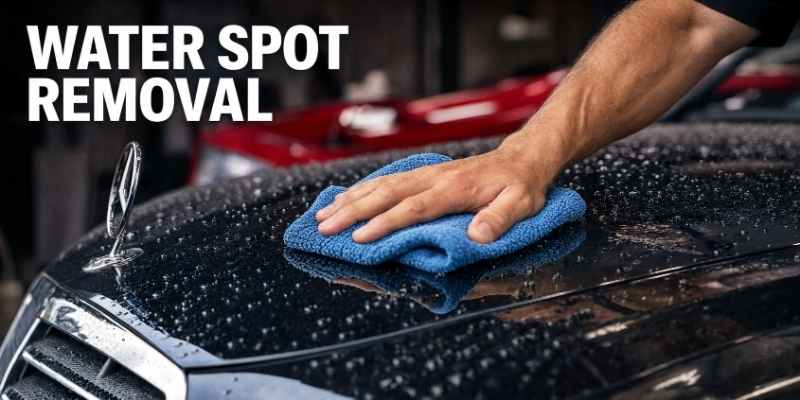
After you wash your car and rinse it well, you expect a clean finish. But when the water dries, you see stubborn white spots on the paint, glass, or mirrors. This can be really frustrating.
In areas like Marbella, Mijas, and Estepona, the combination of tap water and strong sunlight creates tough deposits that damage your car’s finish. To prevent hard water spots on your car paint, it helps to know about local water quality and adjust your car care routine for the coastal climate.
This guide explains why mineral deposits form, the right washing and drying methods, long-term protective coatings, and safe ways to remove spots. Following these tips can keep your vehicle looking great.
Why Costa Del Sol Water Causes Car Paint Spots
Hard water spots are not just dirt; they are solid mineral deposits left on your car when water dries up.
High Mineral Levels in Local Tap Water
In Málaga province, tap water often has high levels of dissolved minerals, mostly calcium carbonate (CaCO₃) and magnesium carbonate (MgCO₃). While the water is safe to drink, it still has a lot of minerals, which is known as hard water.
When you wash your car or when sprinklers spray your vehicle, this mineral-rich tap water sits on the paint. As the water evaporates, it leaves these heavy minerals behind, forming chalky white rings on your car’s surface.
Hot Weather Leads to Faster Drying
The hot Mediterranean climate in Southern Spain makes this problem worse. The warm air and strong sunlight heat up dark car panels quickly. When rinse water hits a hot surface, it evaporates very fast.
This quick drying can happen before you have a chance to wipe the car down. When the water dries too quickly, it can bake the concentrated minerals onto the paint.
In the summer, high temperatures can even cause the minerals to react with the warm clear coat, increasing the chances of permanent damage.
Tap Water vs. Hard Water Spots on Vehicle Paint
Water marks can affect your vehicle’s paint in different ways. It’s important to understand how these marks develop, from temporary surface spots to more serious damage. This knowledge helps you take the right steps early on.
Spot Classification | Surface Location | Physical Characteristics | Severity & Paint Impact |
Type I (Surface Residue) | Top of the clear coat | Raised, chalky white rings or dried droplets; smooth paint underneath | Mild: Fresh mineral crust resting on surface; no clear-coat damage |
Type II (Alkaline Staining) | Penetrating top layer of clear coat | Dull marks that remain after washing; slight texture under bright light | Moderate: Minerals have chemically reacted with clear coat resin |
Type III (Baked-in Solar Etching) | Deeply etched into clear coat layer | Sub-surface craters or rings visible under angled light; clear coat pitted | Severe: Heat and UV rays have baked minerals deep into paint layers |
How to Wash Vehicles to Avoid Mineral Deposits
Prevent water spots during the washing process by managing panel temperatures, using pure water, and choosing the right cleaning methods.
Wash Out of Direct Sunlight & Extreme Heat
Never wash a vehicle that has been parked under direct sunlight or driven recently enough to heat the bonnet. Cool body panels slow evaporation, giving you more time to rinse and dry safely. Wash your vehicle in the early morning or late evening when it’s cooler. If you need to wash during the day, find shade under a carport or structure.
Use Deionized Water or Water Softeners
To avoid spots, start with water that has no dissolved minerals. This is especially important if you live in coastal areas like Marbella, Fuengirola, or Estepona. Regular household filters remove certain chemicals and debris but not minerals.
- Water Softeners: These replace calcium and magnesium ions with sodium ions. While they help reduce buildup in pipes, sodium can still leave faint spots if the water air-dries.
- Deionized (DI) Resin Systems: These systems remove nearly all dissolved minerals by passing water through special resin beds. A final rinse with deionized water ensures no solid deposits are left behind.
- Reverse Osmosis (RO) Units: These units filter water to significantly lower total dissolved solids (TDS), providing very clean rinse water.
Apply the Two-Bucket Wash Method
Using the right washing technique prevents dirt and mineral-laden water from harming the paint. Start with a thorough pre-rinse using a pressure washer to remove loose dirt.
Use one bucket for clean rinse water and another for a high-lubricity, pH-neutral car shampoo. Dip a clean microfiber mitt into the soapy water, wash one panel at a time, and rinse the mitt in the rinse bucket before reloading with shampoo.
This method reduces friction and helps prevent mineral particles from scratching the finish. Knowing why white water spots appear after washing can improve your rinsing process and reduce the long-term effects of hard tap water on your vehicle’s clear coat.
Safe Drying Techniques for Coastal Vehicle Care
To avoid hard water spots, the first step is to remove excess water before letting the vehicle air-dry.
Use High-GSM Microfiber Drying Towels
Do not let your vehicle air-dry or use an old chamois, as this can drag minerals across the paint. Instead, choose high-GSM (grams per square meter) twist-loop microfiber drying towels that quickly absorb water.
Use a gentle technique: lay the towel flat on the panel and pull it lightly by the corners. This allows the towel to soak up moisture without pressing down on the surface.
Use Forced Air to Remove Trapped Water
Water often hides in tight spaces like side mirrors, door edges, front grilles, fuel caps, and window seals.
After towel-drying, movement or gravity can cause trapped water to trickle down the clean panels, leaving streaks.
To remove hidden water droplets quickly, use a car dryer, a leaf blower, or a compressed air unit.
Apply a Drying Aid or Quick Detailer
Before drying the panels with a towel, spray a lightweight detailer or drying aid on the wet surface. These sprays contain lubricants that help water droplets slide off the paint. They also neutralize leftover minerals in the water, providing extra protection and making the surface smoother as you dry your vehicle.
Long-Term Paint Protection Against Hard Water
To protect your vehicle’s paint, it’s important to create a barrier that reduces the risk of mineral buildup and chemical damage.
Ceramic Coatings & Synthetic Sealants
Modern paint protection products change the way your car’s clear coat interacts with the environment. They create surfaces that repel water. When heavy minerals in tap water hit a protected surface, the water forms tight beads instead of pooling.
- Synthetic Polymer Sealants: These last about 4 to 6 months and help resist mild mineral buildup and dirt from the environment.
- Professional Ceramic Coatings: These use materials like silicon dioxide (SiO₂) or silicon carbide (SiC) to bond with your paint. They create a strong, smooth barrier. While they don’t make your paint completely immune to spots, they help prevent minerals from damaging the clear coat, making them easier to wash off.
Regular Waxing Schedules for Coastal Climate
Traditional carnauba waxes and hybrid liquid waxes are still good options for protecting your car. Natural carnauba gives a nice shine and resists water.
However, the strong sun, high heat, and salty air in coastal areas can break down the wax quickly. To keep your car protected, wax it every 6 to 8 weeks. This will minimize how coastal sea air impacts vehicle paint when combined with hard water exposure.
Hard Water Spot Prevention Strategy Overview
To keep your car’s paint clear in coastal Andalusia, follow these key steps and choose the right equipment for maintenance.
Care Category | Recommended Equipment / Tool | Action Step | Recommended Frequency |
Washing Environment | Covered shade or garage | Wash panels away from direct sunlight | Every wash session |
Water Treatment | Deionized (DI) resin vessel | Perform final spot-free rinse with pure water | As needed for home washing |
Washing Technique | Dual buckets, pH-neutral shampoo, microfiber mitt | Pre-rinse loose grit, wash panel by panel | Every 1–2 weeks |
Drying Method | High-GSM microfiber towel, filtered forced air blower | Blow out crevices, blot-dry panels promptly | Immediately post-wash |
Drying Support | Polymeric drying aid / Quick detailer | Mist wet panels during towel drying for slickness | Every wash session |
Surface Protection | Synthetic sealant or ceramic coating | Apply a durable barrier to resist mineral bonding | Sealants: 2x/year; Coatings: 2–5 years |
Removing Fresh Hard Water Spots Safely
If hard water spots dry on your paint, act quickly to prevent them from etching into the clear coat.
Use Mild Acidic Detailers & Vinegar Rinses
Calcium and magnesium deposits are alkaline, so use a mild acid to neutralize them before they bond to the clear coat. You can find dedicated commercial water-spot removers that use weak acids safe for car finishes.
Alternatively, mix equal parts of distilled water and white vinegar (5% acetic acid) to create a DIY solution that dissolves fresh mineral deposits. To use this solution, spray it onto a clean microfiber towel and gently wipe the spot.
Let it sit for 30 to 60 seconds, then wash the area with a pH-neutral car shampoo and clean water to neutralize the acid. If you prefer a hands-off approach or need to remove severe deposits, consider hiring a professional car exterior washing service to protect your paint.
When Professional Paint Correction Is Needed
If you ignore mineral deposits and let them sit for weeks in the heat, simple cleaners may not help. Once minerals etch into the clear coat (Type II or Type III spots), you must use mechanical methods to fix it.
Professional paint correction involves using special polishers and abrasive pads to carefully remove damaged layers of the clear coat until the surface is smooth again.
Protect Your Vehicle's Paint with WE Cleaning
To keep your car’s paint shiny and clear in Costa del Sol, wash it out of direct sunlight, use clean rinse water, dry it right away, and maintain protective coatings.
If water spots become tough to remove, or if you don’t have time to wash your car, consider professional help.
WE Cleaning offers special paint protection, mineral removal, and mobile car wash services throughout Costa del Sol, restoring your vehicle’s shine right at your location.
FAQs About Hard Water Spots on Costa Del Sol Cars
Can Calima Dust Worsen Hard Water Spotting?
Yes. Calima dust contains small particles from the Sahara, like quartz silica and alkaline minerals. When this dust settles on your car and combines with dew, light rain, or tap water, it creates a muddy, alkaline substance.
When the sun dries this mix, it sticks to your car’s clear coat. Always perform a thorough pre-rinse when safely removing Saharan dust from clear coats rather than dry-wiping, which causes severe paint scratching.
Is Hosepipe Washing Restricted in Andalusia?
Yes, during severe drought periods, regional and municipal authorities issue strict water usage regulations. According to official Junta de Andalucía drought decrees, non-essential municipal tap water usage—including domestic car washing with hosepipes—may be restricted or prohibited in various municipalities across Málaga province.
Drivers can maintain their vehicles cleanly and legally by adopting compliant waterless car wash solutions or eco-friendly rinseless washing methods.
Understanding local regulations is essential when navigating car washing during Andalusia water restrictions to avoid steep municipal fines while keeping paint protected.
Will a Standard Car Wash Remove Mineral Spots?
No. Automatic car washes often use quick sprays and high-pH detergents that do not remove hard mineral spots. In fact, washes that recycle water without proper filtering can leave minerals on your car during drying, making the spotting worse.
Does Ceramic Coating Make Paint 100% Spot-Proof?
No coating can make your car completely resistant to water spots. Ceramic coatings do cause water to bead up, but if those beads sit on the car in the hot sun, they can leave mineral residue when they evaporate. The main advantage of ceramic coating is that it protects the clear coat from the minerals, making it easier to remove spots later.


