
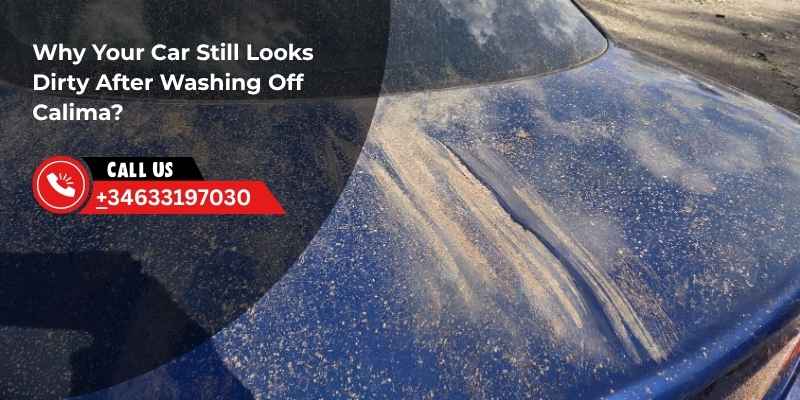
Many drivers on the Costa del Sol feel frustrated when they wash their cars after a Saharan dust storm, only to see a hazy film return as the paint dries. If your car still looks dirty after washing off Calima, you are not alone.
Calima mud is different from regular road dirt, which means that just rinsing with water or using a quick car wash won’t restore the shine. By understanding how this desert dust acts in our Mediterranean climate and knowing the correct cleaning steps, you can protect your car’s clear coat and keep it looking clean.
The Hidden Composition of Saharan Calima Dust
Saharan dust clouds travel across North Africa and the Alboran Sea, depositing thick dust over Andalusia. Unlike regular road dirt, which is mostly made of organic materials like oils and plants, Calima dust is mostly made up of inorganic silt. When rain washes this dust onto your car (known as lluvia de barro), it leaves a tough mineral layer.
Tiny Abrasive Particles and Clay
The dust that falls during a Calima has a lot of tiny silica, feldspar, clay oxides, and fine quartz grains. Quartz is rated 7 on the Mohs hardness scale, while standard car paint rates between 3 and 4.
According to AEMET, the meteorological agency, Saharan dust increases fine particle levels (PM10 and PM2.5) across southern Spain. When these tiny particles settle on your car, their sharp edges cling tightly to a smooth surface.
Wiping or scrubbing this dust off while dry can scratch the paint and cause swirl marks. To remove calima without scratching the car paint, you need to follow careful steps.
Rainwater Chemistry and Calima Mud Formation
As rain falls through a Calima cloud, it picks up gases and dust. This process turns light rain into alkaline mud droplets.
When these droplets land on warm car surfaces, the water quickly evaporates in the hot Mediterranean sun.
This leaves behind clay oxides and minerals that harden into a crust, making it hard to wash off with just low-pressure water.
Why Standard Washing Leaves a Dull Film on Your Car
A quick rinse or touchless wash can leave a cloudy, white-grey film on your car. This dullness happens due to chemical reactions, water quality, and dust getting trapped in the paint.
Hard Water and Mineral Spots
In places like Málaga, Fuengirola, and Marbella, tap water has high levels of minerals like calcium and magnesium (hard water). When you wash a dirty car with tap water and let it dry, two sources of minerals mix together:
- Dust from the Sahara that sticks to the car.
- Minerals from the tap water that stay when water droplets evaporate.
[Calima Silicates] + [Tap Water Hardness] + [Direct Solar Heat] = Baked Calcified Haze
As the water dries, these minerals form hard water spots, which look like chalky rings. If you’re dealing with stubborn spots, check out our guide on how to prevent hard water spots on car paint in Costa del Sol.
Static Charge and Dust
Tiny dust particles can build up an electric charge as they float in the air and settle on your car. When you drive on busy roads like the A-7, your car collects a thin, oily layer of exhaust and tire residue. This oily layer makes dust stick to the paint, and normal hose water can’t wash it away.
Dust Trapped in the Clear Coat
The clear coat on a car is not perfectly smooth; it has tiny pores and defects. Very fine Saharan dust can get trapped in these pores. Because the dust is not visible on the surface, regular water sprays won’t remove it, leaving the car looking cloudy after it dries.
Common Car Washing Mistakes After a Calima Event
Cleaning your car the wrong way can turn temporary dust into lasting damage. It’s important to avoid key mistakes when washing your car in southern Spain.
Washing Under Direct Mediterranean Sunlight
In the hot sun of the Costa del Sol, your car can heat up to over 60°C. Washing your car while it’s hot makes soap and water dry too quickly. Instead of lifting dirt, the soap hardens and locks in dust, leaving streaks and haze on your car’s surface.
Using Household Soaps or Single-Bucket Methods
✅Household Dish Soap:
Dish soap removes grease but also strips away protective wax and sealants. This makes your clear coat vulnerable to UV damage and mineral buildup.
✅Single-Bucket Washing:
Using one bucket means you recirculate dirt. Each time you use the wash mitt, you drag sharp particles across the surface, which can create scratches called swirl marks.
✅Tunnel Brush Car Washes:
Automated car washes with heavy rotating brushes can hold onto dirt from previous cars and scratch your soft topcoat.
Easy Guide for Cleaning Your Car After a Dust Storm
To effectively remove Saharan dust without harming your car’s paint, follow these steps carefully:
- Rinse Without Contact
- Apply Snow Foam
- Wash with Two Buckets
- Clean Hard-to-Reach Areas
- Dry with Soft Cloths
Initial Wash and Safe Chemical Use
Avoid touching the dusty paint with sponges or mitts at the start.
- High-Pressure Touchless Rinse: Use a pressure washer set to around 100–120 bar. Hold the nozzle about 30 cm from the car to remove large chunks of dirt.
- High-Foaming Snow Foam: Cover the entire car with a thick layer of pH-neutral snow foam or citrus pre-wash. Let it sit for 4 to 5 minutes. This foam helps lift dust off the paint without scrubbing.
Contact Washing with Two Buckets
Once the abrasive top layer is rinsed away, remove the residual electrostatic film safely:
- Prepare Two Buckets: Fill one bucket with soapy water and the other with plain water. Place grit guards at the bottom of both.
- Use a Soft Microfibre Mitt: Wash one section of the car at a time. Rinse the mitt in Bucket B before dipping it back into Bucket A.
- Flush Hidden Spots: Use water to clean out areas like window seals, door mirrors, fuel caps, and grille openings. These spots can trap mud that may leak out later if not cleaned.
Removing Mineral Spots and Drying
- Apply Mineral Spot Remover: If you see stubborn marks after rinsing, spray a mild acidic remover to dissolve any residue.
- Lubricate Microfibre Dry: Use a quick detailer on wet panels. Pat the panels dry with a high-quality microfibre towel instead of dragging it across the surface. You can also use warm air to dry hard-to-reach areas.
For detailed home care instructions, check our post-calima car cleaning checklist. If you prefer professional help, arrange for a vehicle wash service in the Costa del Sol to keep your car looking clear and clean.
Protecting Your Vehicle Paint from Future Calima
To keep your vehicle’s paint safe, consider applying paint protection. This helps reduce dust buildup, making it easier to clean after Calima and preventing damage to the clear coat.
Paint Protection Options for Defense Against Calima
Protection Type | Mineral & Etching Resistance | Hydrophobicity & Dust Release | Average Durability | Best Use Case |
Traditional Carnauba Wax | Low (Melts under extreme solar heat) | Moderate | 4 – 8 Weeks | Show cars, short-term gloss enhancement. |
Synthetic Polymer Sealant | Moderate | High | 4 – 6 Months | Daily drivers seeking easy wash maintenance. |
Ceramic Coating (SiO₂) | High (Resists chemical etching) | Superior (Self-cleaning effect) | 2 – 5 Years | Long-term defense against UV, salt air, and Saharan mud. |
Environmental Rules and Water Usage Limits
During serious droughts in Andalusia, local authorities set emergency measures (planes de sequía). Cities like Marbella, Estepona, and Málaga often limit the use of drinking water for washing cars at home with hoses.
To avoid fines, check local municipal regulations on home car washing. Residents can find compliant options in our guide on car washing during water restrictions in Andalusia, or they can book a mobile car wash that uses eco-friendly, low-water techniques.
Restore Your Vehicle Clear Coat After Saharan Dust
To remove stubborn Calima haze, use chemicals and proper techniques instead of scrubbing hard. Replace old washing habits with touchless pre-washes, high-quality drying towels, and steps to remove minerals.
This way, you can safely clean your car and keep the clear coat shiny. If you can’t wash your car thoroughly at home because of time or water restrictions, consider hiring a professional mobile detailer.
They can do the complete cleaning process safely at your location. Check out eco-friendly waterless cleaning options to maintain your vehicle’s condition year-round in the Costa del Sol.
FAQs About Removing Calima Dust from Vehicles
Can Calima dust permanently damage my car's clear coat?
Yes. When wet Saharan dust sits on hot paint in direct sunlight, it can cause damage. Pollutants and mineral salts can bake into the clear coat, leading to permanent pitting, etching, and oxidation over time.
Why does my car look smeared after using a car wash?
Automated car washes often reuse water, especially during dry spells. If the filtration systems can’t keep up with mud, the recycled water may contain total dissolved solids (TDS) and oil, leaving smudges on your car’s surface.
Should I use clay bars to remove Calima film?
Only after you clean the car with chemicals first, using a clay bar on dirty surfaces can scratch your paint because it drags hard particles along the car’s surface.
How soon after a Calima event should I wash my car?
Wash your car within 48 to 72 hours after the dust settles. Letting the mud sit in the sun for too long increases the risk of damage. Always check the weather to make sure dust clouds have cleared before washing.


