
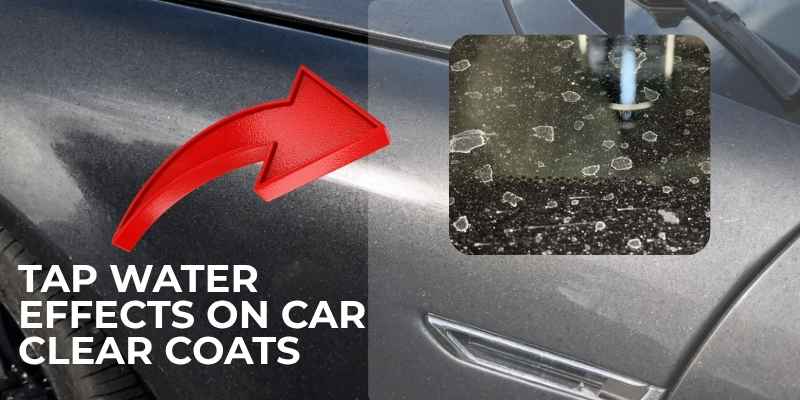
Few things are more frustrating than car washing, drying it, and then finding white rings or cloudy marks across the paint. These spots often come from dissolved minerals left behind as tap water evaporates.
In some cases, they remain on the surface. In others, a stubborn defect may remain in the clear coat itself. Understanding mineral-heavy tap water clear coat damage helps you choose the right fix without polishing or scrubbing unnecessarily.
This guide explains how mineral deposits form, how to judge their severity, and how vehicle owners on the Costa del Sol can safely remove and prevent them.
Understanding Tap Water and Car Paint
Tap water is not just pure H₂O. It contains dissolved substances, including minerals that come from the water source and treatment process.
Water hardness is mainly due to calcium and magnesium. When you wash your vehicle, these minerals go with the water across the paint. The water evaporates, but the dissolved minerals stay behind as visible residue.
How much residue you see depends on the water’s composition, how much water is left on the car, and how quickly it dries.
Water Hardness Compounds: Calcium and Magnesium
Calcium and magnesium are the main minerals that make water hard. We often describe mineral content as calcium-carbonate equivalents. Total Dissolved Solids (TDS) refers to the total amount of dissolved material in the water.
As the water droplets dry, minerals become more concentrated. After the water is gone, you may see a pale ring or film left behind. This explains why a car can appear clean when wet but show white marks when it dries.
It’s also important to note that water quality can vary in different areas of Costa del Sol. For example, Málaga’s water company, EMASA, reports that its water hardness is usually below 110 mg/L, which is considered semisoft because reverse osmosis reduces hardness.
This is why it’s better to test local water instead of assuming all Costa del Sol tap water has the same mineral level. Check Málaga municipal water hardness information for guidance from EMASA.
Clear Coat Structure and Surface Texture
Modern car paint has several layers. The coloured basecoat gives the car its look, while the clear coat protects it from sunlight, washing, road dirt, and weather.
3M describes clear coat as the transparent layer on top of the basecoat, which is the final layer exposed to the environment. Even a glossy finish is not perfectly smooth at a microscopic level.
The factory texture, scratches, old polishing marks, dirt, and small defects can create spots for mineral residue to collect. Heat plays a role, too, because warmer surfaces dry faster.
The real issue isn’t that minerals seep deeply into the surface but that concentrated residue becomes harder to remove as it dries.
How Mineral Deposits Damage Automotive Paintwork
Mineral deposits can seriously harm your car’s paint. If you do not clean them, the residue left by tap water goes through three stages of damage, starting from a simple deposit to permanent etching that damages the clear coat.
Stage 1: Surface Etching and Crystalline Deposits
In the first stage, water droplets leave behind crystalline rings on the clear coat surface when they evaporate. These deposits are made of calcium carbonate and sit on top of the protective polyurethane layer.
The clear coat remains intact at this point, but the alkaline crystals (with a pH between 8.5 and 10) create a mild chemical reaction. This reaction disrupts light reflection, reducing the shine and giving a rough, chalky feel when you touch it.
Stage 2: Chemical Etching and Clear Coat Penetration
If the deposits from Stage 1 are exposed to sunlight and high temperatures, they move to Stage 2. The heat from the sun bakes the mineral ring, causing a reaction with the polyurethane resin.
As your car gets hotter, the clear coat softens and allows the mineral salt to seep into tiny pores. The alkaline deposits gradually dissolve the surrounding resin, forming small dips and rough spots.
At this stage, washing the car won’t restore its shine because the clear coat has been physically damaged.
Stage 3: Deep Acid Etching and Sun-Baked Bonding
Stage 3 indicates serious paint damage. Over time, cycles of heating, cooling, and moisture lock the mineral crystals deep into the paint.
Continuous chemical damage thins the clear coat and reduces its UV protection. In severe cases, the minerals can penetrate through the clear coat, reaching the base coat color.
Once the clear coat is breached, oxygen and moisture cause further damage, resulting in pitting, flaking, and permanent cloudiness that can only be fixed by repainting.
Hard Water Spot Types: Type I vs Type II Damage
Understanding the difference between two types of water spots on your car is important before deciding how to fix them. These spots fall into two main categories:
Feature | Type I Water Spots (Above-Surface) | Type II Water Spots (Sub-Surface) |
Defect Depth | Sits entirely on top of the clear coat layer | Cuts into the polyurethane clear coat structure |
Physical Form | Elevated, chalky white mineral rings or crusts | Recessed craters, etched rings, or sunken pits |
Tactile Feel | Slightly raised, rough surface texture | Smooth or jagged indentation felt with fingernail |
Clear Coat Integrity | Polyurethane matrix remains uncompromised | Polyurethane resin is chemically dissolved/eroded |
Primary Remedy | Non-abrasive low-pH chemical decontamination | Abrasive machine polishing or compounding |
Restoration Goal | Dissolve basic mineral scale without touching paint | Level surrounding clear coat down to crater floor |
Type I Water Spots: Above-Surface Minerals
Type I water spots are mineral deposits that sit on top of the paint. They look like bright white circles or hazy droplets with clear edges.
If you run a microfiber towel over these spots, you will feel a rough texture due to the raised minerals. Since Type I spots haven’t damaged the protective clear coat, you can remove them completely with chemical cleaners without needing to do any mechanical polishing.
Type II Water Spots: Sub-Surface Paint Etching
Type II water spots happen when hard mineral deposits eat into the clear coat, creating permanent craters. Even after you remove the white mineral layer, the ring from the damage remains visible in bright light.
These craters cause light to reflect unevenly, making the spots noticeable. To fix Type II damage, you need to smooth out the surrounding clear coat by using a micro-abrasive polish.
Why Coastal Areas Make Hard Water Damage to Cars Worse
Hard tap water causes problems everywhere, but car owners in warm coastal areas see even faster paint damage. Local conditions make water droplets turn into harmful agents quickly.
High Solar Heat and Mediterranean Climate Factors
In southern coastal regions, like the Costa del Sol, strong sunlight causes water to evaporate quickly. During the summer, temperatures often go above 35°C, making dark car surfaces heat up to more than 65°C.
This high temperature speeds up how fast water evaporates. Instead of sitting long enough to wipe off, water quickly dries on hot metal surfaces. This fast drying means that minerals in the water, like calcium carbonate, come out of the water solution faster.
Plus, the heat makes the car paint expand, opening tiny pores just as concentrated minerals settle on the surface. Knowing how local weather affects cars is crucial for preventing hard water spots on car paint.
Calima Dust and Salt Air Interaction with Mineral Water
Coastal areas also have other particles in the air that can harm hard water:
- Airborne Coastal Salt Aerosol: Sea breezes bring tiny salt particles that land on cars. When hard water is sprayed on salty surfaces, these salts mix with calcium and magnesium. This creates a reactive, corrosive mixture.
- Saharan Dust (Calima Events): Sometimes, dust from the Sahara carries fine sand rich in quartz and other materials. When you rinse a dusty car with hard water in direct sunlight, tiny silica particles can get trapped in drying mineral spots. Wiping the surface can cause scratches. If your car still looks dirty after washing off Calima, learning how to safely clean Saharan dust can help.
Safe Methods to Remove Water Spots Without Damage
Start with the simplest method that might solve the problem.
- Move your vehicle into the shade and let the hot surfaces cool down.
- Wash off any loose dust and dirt.
- Dry the surface and check for spots.
- Use an automotive water-spot or mineral remover as directed.
- Rinse or neutralize the product as the manufacturer advises.
- Inspect again in good lighting.
- Only consider polishing if there is still a clear-coat defect.
Avoid starting with hard scrubbing, harsh household chemicals, or machine-polishing a dirty surface.
Chemical Treatment with Mineral Removers
Mineral deposits behave differently than grease and dirt. Regular car soap is for routine washing, so for tough mineral buildup, use a special water-spot remover. To use it safely:
- Work on a cool surface.
- Follow the product’s recommended timing.
- Test on a small, hidden area first.
- Never let the chemical dry on the surface.
- Rinse thoroughly when needed.
- Check the results before trying again.
A stronger product is not always better. The right product depends on your car’s paint, coating, finish age, and how severe the deposits are.
Polishing for Deep Mineral Etching
If the chemical treatment removes the mineral scale but leaves a mark, polishing may help. Machine polishing uses fine abrasives to smooth out a small amount of the clear coat so that light reflects better.
Polishing removes material instead of adding it, so deep correction shouldn’t be your first step. Professional repairs also use careful polishing or sanding to fix clear-coat defects.
Preventing Mineral Spot Damage on Vehicle Clear Coats
To protect your vehicle’s paint from hard water spots, it’s better to prevent the issue than to keep polishing the clear coat. Following a proper washing routine will help maintain paint clarity over time.
- Wash your vehicle in shaded areas or during early morning to reduce heat on the panels and slow down evaporation.
- Never let tap water dry on the vehicle’s surface.
- Use drying aids or spray sealants while towel drying to lower friction and improve surface slickness.
- Consider adding inline deionization filters to your wash setup to remove mineral ions before they reach the hose.
Water Filtration and Deionization Systems
The best way to avoid hard water spots during washing is to treat the water first. Standard water softeners replace calcium and magnesium in water with sodium.
This stops scale build-up in plumbing but doesn’t remove other minerals, which can leave white sodium spots on your vehicle. For spot-free washing, you can use inline deionization (DI) systems or reverse osmosis (RO) filters.
DI systems remove all mineral ions, resulting in water with zero dissolved solids (0 ppm). Rinsing with deionized water means it will evaporate without leaving any mineral marks, even in direct sunlight.
Testing by local water authorities (Junta de Andalucía) shows that municipal water in southern Spain has high mineral levels, making filtration important for car detailing.
Protective Coatings: Waxes, Sealants, and Ceramics
Applying a protective layer over your car’s clear coat helps guard against mineral damage:
- Carnauba Waxes: These natural waxes add shine and create a temporary barrier against water. However, they can melt in high heat, especially in the Mediterranean summer.
- Synthetic Polymer Sealants: These sealants bond well with clear coats and provide protection for 4 to 6 months against environmental damage and heat.
- Ceramic Coatings (SiO2): These coatings use advanced technology to form a tough, glass-like layer over the clear coat. They repel water effectively and resist acids and bases.
While ceramic coatings don’t make your paint immune to water spots, they protect the clear coat underneath. If hard water dries on a ceramic coating, the minerals stick to the coating instead of damaging the clear coat below.
Maintaining a coated exterior through a professional car exterior cleaning service ensures hydrophobic properties remain fully active against mineral build-up.
How to Protect Vehicle Finishes from Mineral Damage
Mineral-rich tap water can threaten your car’s paint, especially in warm areas where heat speeds up evaporation. Knowing how this damage happens—from light mineral spots to severe etching—can help you take quick action before it becomes irreversible.
To protect your car’s finish, wash it in the shade, use filtered water, apply ceramic coatings, and clean off mineral spots with safe low-pH cleaners. If you face severe water spots or damage, consider mobile car washing services for professional cleaning and restoration at your location.
FAQs About Mineral Tap Water Clear Coat Damage
Can Tap Water Permanently Ruin My Car's Paint?
Yes, tap water can cause lasting damage if water spots are left on hot surfaces for a long time. While tap water itself is not corrosive, the calcium and magnesium left behind after evaporation can create a chemical reaction when exposed to heat. This reaction can bake mineral spots into the clear coat, leading to permanent damage that requires polishing or repainting to fix.
Does Vinegar Safely Remove Water Spots from Clear Coat?
Diluted white vinegar (a 5% solution) can remove light surface mineral spots because it breaks down calcium. However, regular vinegar does not have the added protective ingredients found in special car cleaning products. Using raw vinegar can strip wax protection and cause scratches if you use the wrong towels. It’s better to use a specialized mineral remover or mix vinegar with distilled water (1:1) and rinse thoroughly afterward.
Why Do Water Spots Appear Even After Hand Drying?
Water spots can still appear after drying because heat from the car can cause wash water to dry too quickly, leaving spots behind before you can wipe them off. Also, using damp or low-quality drying towels can leave tiny droplets. When these droplets evaporate, they concentrate minerals onto the paint. To prevent this, use a soft microfiber drying towel with a synthetic drying aid.
Are Ceramic Coatings Fully Immune to Water Spotting?
No, ceramic coatings are not entirely immune to water spots. They repel water, causing it to bead on the surface. If these water beads sit on a hot ceramic-coated hood, they can leave mineral spots as the water evaporates. However, because the ceramic layer is strong, the minerals only affect the coating and not the clear coat beneath.


