
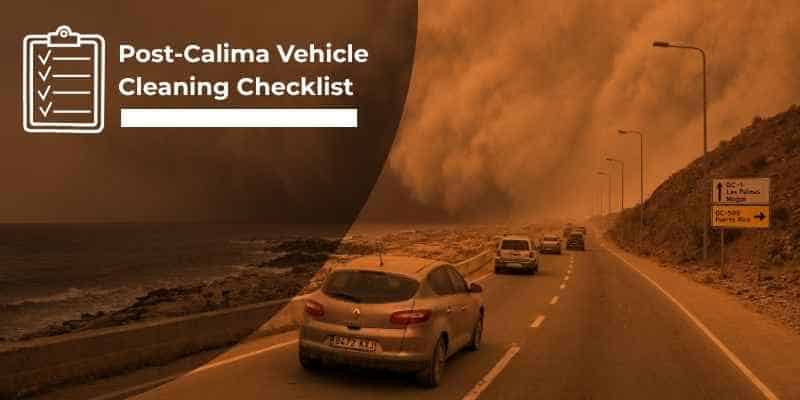
A Calima can leave your car covered in reddish Saharan dust or dried lluvia de barro within hours. For drivers across Málaga and the Costa del Sol, the difficult part is not simply getting the car clean. It is removing the fine mineral grit without dragging it across the paint.
This post-Calima vehicle cleaning checklist gives you a safer order to follow. The aim is simple: remove contamination without creating avoidable scratches.
Understanding Calima Dust Damage
Saharan dust is not a single substance; it has many different components. Studies on dust reaching Europe show that it can include clay, quartz, calcite, and other mineral particles. The composition varies depending on the source and event.
For vehicle owners, the main concern is the fine dust accumulating on surfaces. When it rains through a dusty sky, that dust can turn into muddy residue instead of remaining as loose powder.
For broader seasonal preparation, see WE Cleaning’s guide to preparing your vehicle for Calima season.
Physical and Chemical Risks to Car Paintwork
Avoid dry-wiping a dusty car or using a sponge on unwashed surfaces. This can push small mineral particles into the clear coat, causing scratches and swirl marks.
On sunny coastal roads, high temperatures can raise the surface of your car above 60°C. When wet mud interacts with the sun and dew, it can create hard water spots and etched marks on the paint that regular washing won’t remove.
It is important to know how to safely remove Saharan dust without scratching the paint. You should also take steps to prevent hard water spots on car paint caused by mineral-rich wash water drying in direct sunlight.
Interior Air Quality and Mechanical Vulnerabilities
Saharan dust can enter the inside of your car as well. Tiny particles can slip through gaps in rubber seals around doors and windows, covering the cabin surfaces with fine dust.
When you use the heating, ventilation, and air conditioning (HVAC) system, these particles can clog the cabin air filter. This leads to less airflow, bad smells, and potential breathing issues for passengers.
Additionally, fine sand can get into the engine compartment and settle on the intake air filter, making it less effective and causing more wear on the engine. Exploring how Calima dust impacts car engines and air filters helps clarify why mechanical inspections should always follow a major storm event.
Step 1: Pre-Wash and Surface Preparation
The main goal during the pre-wash phase is to clean the surface without touching the vehicle. Removing up to 90% of heavy dirt helps avoid scratches on the paint.
TOUCHLESS PRE-WASH WORKFLOW |
[Top-to-Bottom Rinse] ──> [Snow Foam Dwell] ──> [Heavy Flush] (Flushes loose sand) (Encapsulates silica) (Removes 90% of grit) |
High-Volume Rinsing Techniques
Start by thoroughly rinsing the vehicle according to the manufacturer’s instructions for pressure washers. Work carefully around the vehicle to remove contamination from:
- Roof, glass and upper panels
- Bonnet, boot and doors
- Panel gaps and badges
- Window channels and mirror housings
- Fuel-filler area
- Wheel arches and lower panels
Do not use a dry microfiber towel to remove stubborn patches at this stage.
If you don’t have a pressure washer at home, consider hiring a professional mobile car wash service for safe, touchless rinsing.
You can also book specialized car cleaning services that focus on multi-stage decontamination for delicate clear coats.
Applying Pre-Wash Foam and Snow Foam Soap
After flushing off the heavy dirt, apply a thick layer of pH-neutral snow foam or citrus-based pre-wash cleaner to the entire exterior. Snow foam helps break the bond of remaining dust and captures small dirt particles in the suds.
Let the foam sit for 3 to 5 minutes to lift tough grime. Do not let the foam dry in direct sunlight. Rinse the vehicle completely from top to bottom with clean water before starting the physical wash phase.
Step 2: Contact Wash and Safe Scrubbing
Only touch the surface after rinsing off heavy dirt with water. Use proper washing techniques and soft cleaning tools to avoid scratching the paint.
The Two-Bucket Method with Grit Guards
➤ Prepare:
- One bucket with clean water and car soap
- One separate rinse bucket
- Clean washing tool
- Grit guards if possible
➤ Then:
- Start with the cleaner upper sections.
- Wash a small area at a time.
- Use light, straight passes instead of aggressive scrubbing.
- Rinse the mitt regularly in the separate rinse bucket.
- Reload it with clean shampoo solution.
- Leave the dirtiest lower panels until last.
If the mitt feels gritty, stop and rinse or replace it.
Selecting Safe Mitts, Soaps, and Drying Towels
Avoid traditional yellow sponges, as they can trap dirt and scratch the surface. Instead, use soft microfiber wash mitts or synthetic lambskin mitts that pull dirt away from the paint.
When drying the car, skip the regular chamois. Use a high-density microfiber drying towel (at least 500 GSM) lightly sprayed with a quick-detailer spray.
Lay the towel gently across the surface and pull it by the corners to soak up water without pushing hard on the clear coat.
Step 3: Wheel, Tire, and Undercarriage Care
Saharan dust can build up on lower vehicle parts, mixing with brake dust and coastal moisture to create a corrosive mixture.
Clearing Brake Components and Alloys
Alloy wheels can trap a lot of Calima dust behind the spokes and in the brake calipers. Spray the wheels with a non-acidic iron remover and wheel cleaner to dissolve the iron particles and sand.
Use a soft microfiber brush to clean deep inside the wheel wells and calipers, then rinse thoroughly. For fleet managers and commercial vehicle owners, using a full fleet vehicle wash solution helps protect brake parts from wear caused by dirt buildup.
Flushing Undercarriage Silt Build-Up
Vehicles that drive along coastal roads like the A-7 and AP-7 are exposed to both desert dust and salty air. This combination can cause underbody corrosion on frame rails, suspension arms, and exhaust mounts.
Flush the undercarriage with high-pressure water to remove mud from the chassis channels, wheel arch liners, and suspension mounts.
Step 4: Cleaning the Interior and HVAC
Fine dust can get into vehicle cabins, dirtying upholstery, dashboard vents, and air filters.
Vacuuming Upholstery and Dashboard Surfaces
Avoid using a damp cloth to clean Saharan dust from interior surfaces. The moisture can turn the dust into a muddy smear that stains fabric and leather.
- Step 1: Use a dry vacuum with a soft horsehair brush to gently lift dust from air vents, leather seams, carpet fibers, and headliners.
- Step 2: Vacuum seat cracks and stitching lines where dirt can gather.
- Step 3: After removing the dry dust, clean vinyl and leather with an interior detailer spray and a clean microfiber cloth.
If your vehicle has a lot of interior dust, a deep interior cleaning can help. Additionally, fabric seats with wet dust stains may need professional upholstery care to remove the stains.
Checking and Replacing Cabin Air Filters
The cabin pollen filter (filtro de habitáculo) acts as the primary obstacle preventing dust from entering the vehicle ventilation system. After heavy Calima events, check the filter behind the glove compartment or engine cowl. If it looks grey, clogged with orange silt, or smells musty, replace it with a new activated-carbon or HEPA filter to keep the air inside the vehicle clean.
Step 5: Post-Clean Protection and Sealants
Protection comes after the vehicle is completely clean. Do not seal remaining Calima residue under wax or another coating.
Applying Waxes, Sealants, or Ceramic Coatings
Choose the right product based on your vehicle’s finish. You can use:
- Automotive wax
- Synthetic paint sealant
- Compatible spray protection
- An existing ceramic-coating maintenance product
These products help make future cleanings easier by creating a smoother, water-repellent surface. However, they do not make your paint scratch-proof, so remember to clean your vehicle carefully after the next dust event.
Glass and Mirror Care Recommendations
To clean the outside of your car’s glass, use an alcohol-based cleaner made for auto glass. This will remove dirt and mineral deposits.
After cleaning, apply a rain-repellent treatment or hydrophobic coating to the windshield and side mirrors. Also, wipe the wiper blades with a damp microfiber cloth soaked in isopropyl alcohol.
Calima Cleaning Under Andalusian Water Bans
Severe droughts in the Costa del Sol often lead to local water restrictions (bandos municipales) issued by regional authorities like the Junta de Andalucía and local water suppliers such as Acosol. Motorists must adjust their cleaning habits to comply with regional water conservation laws.
Local Rules for Car Washing and Hose Usage
When drought restrictions are active, washing vehicles with tap water at home or in community garages is not allowed in areas like Marbella, Mijas, Fuengirola, and Estepona.
Breaking these hosepipe bans can result in hefty fines. Car owners should check local legal guidelines regarding the legality of home vehicle washing in Marbella and explore authorized methods for keeping your car clean during hosepipe bans. Alternatives include using self-service car washes that recycle water properly.
Safe Rinseless and Waterless Cleaning Options
When hosepipe use is restricted, rinseless and waterless wash products can help clean vehicles safely. Rinseless wash concentrates have special formulas that capture light dust, allowing you to wipe it away with soft microfiber cloths without rinsing.
Choosing an eco-friendly waterless car wash service will keep your car clean while complying with official Andalusia water restriction guidelines for car washing.
Complete Vehicle Cleanup Checklist After Dust Storm
Use this simple workflow to clean your vehicle effectively after a dust storm:
Phase | Priority Level | Key Action Required | Estimated Time |
1. Touchless Pre-Rinse | High | Flush exterior top-to-bottom with high-volume water; clear windshield cowl drains. | 15 Mins |
2. Foam Encapsulation | High | Apply pH-neutral snow foam; allow 3–5 min dwell time before rinsing. | 10 Mins |
3. Two-Bucket Wash | Medium | Hand wash panel-by-panel using grit guards and plush microfiber mitts. | 30 Mins |
4. Wheel & Undercarriage | High | Clean brake dust and underbody silt using dedicated non-acidic wheel cleaner. | 20 Mins |
5. Scratch-Free Drying | Medium | Dry paint using plush 500+ GSM towels and quick-detailer spray lubricant. | 15 Mins |
6. Interior Dry Extraction | High | Vacuum vents, seams, and carpets with soft brush attachment; replace cabin filter. | 25 Mins |
7. Protective Sealant | Low | Apply synthetic (SiO₂) spray or ceramic coating to paint and glass surfaces. | 20 Mins |
Professional Post-Calima Restoration Options
Cleaning your car after a dust storm helps keep the paint clear, the air inside fresh, and the resale value high. While following a cleaning checklist on your own can work well, specialized tools and products will provide better results.
If you have limited time or water access, consider contacting a professional mobile detailing company like WE Cleaning to restore your vehicle safely without damaging the clear coat or breaking local environmental rules.
FAQs About Post-Calima Car Cleaning
How long after a Calima storm should I wash my car?
Wash your car within 48 to 72 hours after the dust stops falling. Waiting too long can let mineral deposits and wet mud bake onto the paint in the sun, making it harder to clean and increasing the risk of damage. Don’t wash your car while dust is still falling.
Will an automatic drive-through car wash scratch my paint?
Yes. Automated car washes with friction brushes use heavy nylon rollers that can pick up abrasive sandy particles from other cars. These brushes can scratch your car’s paint and leave swirl marks. Use touchless car washes or hand washing instead.
Can Calima dust permanently stain leather or fabric interior?
Yes. If wet Saharan dust settles on light-colored fabric or porous leather, it can leave reddish stains. Don’t wipe the dry dust with wet cloths, as this will push dirt deeper into the fabric. Start by vacuuming the dust, and if stains occur, use special interior cleaners.
Should I change my engine air filter after every major Calima?
Yes, check your engine air filter after major dust events. Open the filter housing and look at the paper pleats. If you see orange dust or heavy debris, replace the filter. This helps maintain proper airflow and fuel efficiency.


