
If you live in Málaga or anywhere along the Costa del Sol, you are likely used to seeing a thick, reddish-orange layer of Saharan dust on your car. This can be frustrating, and you might worry that this dust could get into your engine and cause damage.
Luckily, the good news is that your car’s air filtration system is designed to block dirt and dust from reaching important engine parts.
However, strong or repeated Calima dust storms can clog your filters. This limits airflow and can lower your car’s performance.
This guide will explain how engine and cabin air filters protect your vehicle, important signs to look out for, and how to check your filters safely after a Calima dust event.
Short Answer: Can Calima Dust Harm Your Engine?
Calima dust usually does not cause immediate harm to your engine. Most modern engines take in air through a sealed system with a pleated air filter. Under normal conditions, a clean and well-fitted filter catches over 98% of airborne particles, including fine dust, before they reach the engine’s combustion areas.
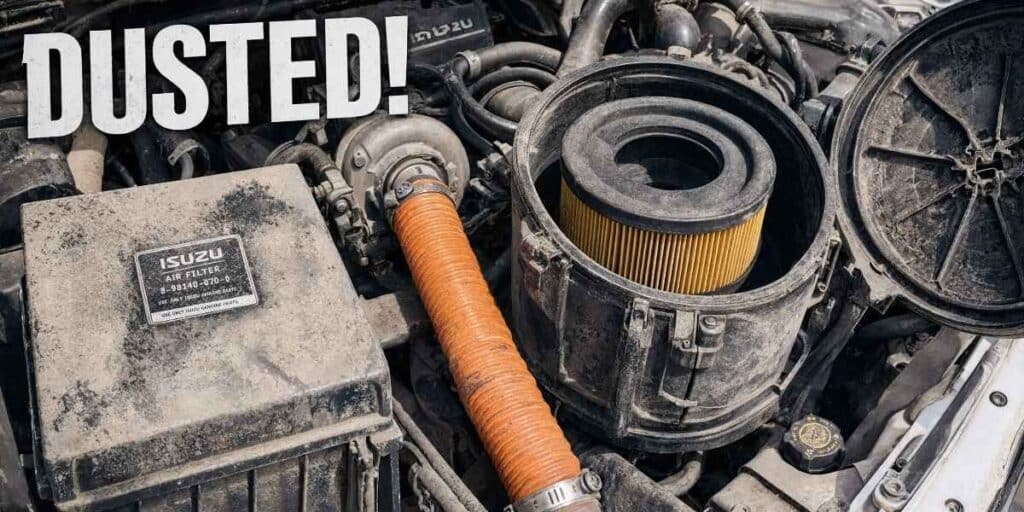
The main concern for your vehicle is not sudden damage, but the gradual clogging of the filter, which is called colmation. When dust fills the filter, it restricts airflow.
Your engine may wear out only if the air filter is damaged, neglected, improperly installed, or if air bypasses the filter due to a crack in the intake hose or an unsealed airbox. A single Calima storm will not ruin a well-maintained engine.
How Calima Dust Moves Through Your Vehicle
To understand how Saharan dust affects your car, it’s essential to know how air enters different parts of the vehicle. A running car pulls outside air into two separate systems:
- The engine air intake
- The cabin ventilation system.
Dust on your car’s exterior doesn’t mean it has entered the engine.
The Engine-Air Intake Route
Outside air comes into the car through an intake near the front grille. The engine creates a vacuum that draws this air into a sealed plastic box containing the engine air filter.
As air passes through the filter, it captures solid particles. Clean air then flows past the Mass Air Flow (MAF) sensor and throttle body, entering the intake manifold and combustion chambers. A good filter acts as a barrier to keep out unwanted particles.
👉A simplified route looks like this:
Outside air → intake opening → airbox → engine air filter → intake sensors → engine
The Cabin-Air Intake Route
Air for the passenger compartment follows a different path. It enters through a cowl intake at the base of the windshield, going through the cabin pollen filter before reaching the HVAC blower fan.
Dust can also enter the cabin when doors, windows, or the boot are open. It’s important to know that the cabin air filter works separately and doesn’t protect the engine.
Driving Exposure vs Parked Exposure
Exposure Parameter | Vehicle Operating (Driving) | Vehicle Stationary (Parked) |
Primary Intake Mechanism | Active intake vacuum drawing ambient air | Passive atmospheric dry and wet deposition |
Engine Filter Impact | High airflow draws dust deep into filter pleats | Minimal intake load; dust sits on outer housing |
Cabin Intake Impact | HVAC fan pulls airborne dust into pollen filter | Dust settles on exterior cowl and rubber seals |
Humidity Interaction | Moisture and dust pack tightly on the filter face | Dust forms an exterior mud crust on paint and glass |
Primary Risk Area | Filter clogging and restricted engine breathing | Paintwork scratching and window seal contamination |
How Calima Affects the Engine Air Filter
Saharan dust in the air can enter an engine’s air filter when you drive through affected areas. The filter helps keep the engine clean by trapping this dust. However, as more dust collects, airflow can decrease.
Dust Loading and Restricted Airflow
Most engine filters have pleated designs. The folds increase the surface area for trapping dirt while allowing enough air to pass through. But as dust builds up, it can block airflow.
According to Volkswagen’s official filter guidance, a heavily clogged air filter can restrict air supply, reduce engine performance, and increase fuel consumption. Signs of a clogged filter include:
- Slower acceleration
- Decreased engine performance
- Increased fuel usage
- A visibly dirty filter
However, these signs do not necessarily mean that Calima caused the problem. Various mechanical issues or driving habits can also lead to power loss and higher fuel use. It’s important to inspect the filter after dusty conditions and not assume it’s just the dust’s fault.
When Dust Can Pass the Filter
Dust that is trapped by a healthy filter is doing its job. The bigger issue is unfiltered air getting into the engine. This can happen if:
– The filter is torn or damaged
– The filter is the wrong size
– The filter is not installed correctly
– The airbox cover is loose
– Seals are damaged or misaligned
– Intake parts are cracked or disconnected
– There are leaks downstream of the filter
According to Bosch, poor sealing can allow dirt to reach downstream parts, like the mass airflow sensor, and cause more engine wear. This is different from dust safely trapped in the filter.
If you see dust on the clean side of the filter or in parts of the intake where it shouldn’t be, don’t treat it as a minor issue. Make sure to arrange for a proper inspection.
Why Repeat Exposure Raises the Risk
A single mild Calima event usually allows enough filter capacity for normal driving. However, driving often through multiple dense dust clouds builds up particle loading over time.
The rate at which a filter becomes full depends on how much you drive, your speed, local dust levels, and humidity. Following the manufacturer’s inspection guidelines is a better approach than relying on an estimated number of dust events.
How Calima Affects the Cabin Air Filter
While the engine filter keeps the car running well, the cabin air filter ensures good air quality inside the car and proper operation of the HVAC system. Car maintenance guides from manufacturers like Toyota state that driving in dusty, desert-like conditions can greatly reduce the lifespan of cabin filters.
Reduced Ventilation and Cooling Performance
A cabin air filter that is full of fine Saharan dust restricts airflow into the passenger area. You may notice these symptoms:
- Diminished Vent Output: Weaker airflow from dashboard vents, even with the fan set to maximum.
- Blower Motor Strain: Increased resistance makes the fan work harder, causing extra heat and noise.
- Impaired Window Demisting: Limited air exchange slows down the clearing of moisture and fog from the windscreen on humid mornings.
- Reduced AC Efficiency: Less airflow over the evaporator core lowers cooling performance in warm weather.
Dust and Air Quality Inside the Cabin
Standard cabin filters trap larger particles (PM₁₀), while activated carbon filters can also catch smaller ones (PM₂.₅) and unwanted smells. However, no filter can stop dust from coming in when doors or windows are open.
Fine red dust can settle on the dashboard, leather seats, and carpet. To keep the interior clean and maintain air quality after a heavy storm, many vehicle owners often choose professional car interior cleaning services.
Warning Signs After a Heavy Calima Event
It’s important to know if your vehicle needs basic maintenance or if it requires professional help. Look for these signs to check if your air filtration system needs inspection.
Engine and Intake Warning Signs
- Slow acceleration or a delay when you press the gas pedal.
- Higher fuel consumption during your regular trips.
- Rough or uneven idling when you start the engine.
- A “Check Engine” light on your dashboard, which may trigger if the airflow is blocked.
- Thick mud or dust filling the pleats when you open the airbox.
Cabin and HVAC Warning Signs
- Reduced airflow from the climate vents in the dashboard.
- A musty, dusty, or earthy smell when you turn on the air conditioning.
- Dust quickly settling back on surfaces shortly after you clean them.
- Windows fogging up that takes longer than usual to clear.
Red Flags That Need a Workshop
If you notice any of these serious issues, schedule an inspection with a qualified mechanic:
- A “Check Engine” light that stays on.
- Strong engine hesitation, misfiring, or a significant loss of power when accelerating.
- Red dust inside the intake hose after the air filter housing.
- Cracked airbox, broken clips, or damaged intake hoses.
- Disconnected or loose sensor wiring near the intake assembly.
What to Do During and After Calima
To manage exposure to Saharan dust, follow these two steps: limit dust intake while the storm is happening, and inspect your vehicle after the dust settles.
Limit Dust Intake While Calima Is Active
- Use Air Recirculation: Set your HVAC system to recirculation mode. This keeps outside air from coming in and reduces dust in your vehicle.
- Keep Windows Closed: Make sure all windows and sunroofs are completely closed.
- Avoid Unnecessary Driving: If possible, delay non-essential trips when dust is heavy. This helps reduce the amount of air passing through your filters.
- Park Indoors: If you can, park your vehicle in a garage or covered area to protect it from dust.
- Prioritize Driving Safety: Keep road visibility and safe driving practices in mind. It’s more important to drive safely than to worry about keeping your car clean.
Inspect the Vehicle Once the Air Clears
When the dust has settled, do a quick inspection:
- Find the engine airbox using your owner’s manual.
- Carefully open the airbox cover without letting loose dust fall into the intake duct.
- Remove the paper filter and check the pleats under a light.
- Gently tap the filter against a hard surface to shake off loose dust. If dirt is still trapped tightly in the pleats, the filter needs to be replaced.
- Vacuum out any loose sand or leaves in the airbox before putting in a new filter.
If your vehicle is covered in dust, review our post-Calima vehicle cleaning checklist and guide on safely removing Saharan dust without scratching your paintwork.
Removing heavy surface dust safely requires proper pre-soaking and professional exterior car washing techniques to protect the clear coat.
Decide Whether to Clean or Replace a Filter
Feature / Action | Engine Air Filter (Standard Paper) | Cabin Pollen Filter |
Primary Material | Resin-bonded pleated cellulose paper | Non-woven synthetic or carbon composite |
Light Surface Dust | Tap gently to dislodge loose sand | Tap gently or vacuum surface lightly |
Heavy Saturation | Replace filter. Paper pleats trap fine silt | Replace filter. Saturated media cannot be restored |
Washing with Water? | NEVER. Water collapses cellulose fibers | NEVER. Causes mold growth and fiber breakdown |
Compressed Air Use? | Not Recommended. Can tear paper media | Not Recommended. Destroys delicate synthetic layer |
Replacement Value | Low cost (€15–€40) vs High engine protection | Low cost (€15–€35) vs Passenger air quality |
Avoid Maintenance Mistakes
After Calima, prevent small filter problems from becoming larger issues.
Do not:
- Run the engine without the air filter.
- Wash a disposable paper filter unless the manufacturer allows it.
- Clean filter media with high-pressure air if that method is not approved.
- Install a filter that is the wrong size or type.
- Close the airbox if the filter is not seated correctly.
- Pressure-wash directly into the engine air intake.
- Leave loose intake hoses or connections unattended.
- Assume blowing away visible dust makes the filter as good as new.
The safest rule is simple: use the manufacturer’s procedure for your exact vehicle and filter.
A Costa del Sol Filter-Care Plan
Drivers on the Costa del Sol should not rely on a made-up “local replacement interval” for their vehicle filters. The best approach is to follow the manufacturer’s maintenance schedule and adjust it based on actual dust exposure. This is true whether you are in Málaga, Mijas, Marbella, Estepona, or elsewhere along the coast.
Match Filter Checks to Actual Dust Exposure
Instead of sticking to fixed dates, change your filter inspection schedule based on your driving conditions:
- High Exposure: If you commute daily on the A-7 / AP-7, park outdoors near the coast, or drive a lot each year, inspect your filter every 3 to 6 months.
- Moderate Exposure: If you park in covered areas and do mixed urban driving in Málaga, Marbella, or Estepona, inspect your filter every 6 to 12 months.
- Low Exposure: If your vehicle is garaged and you drive only a little each year, stick to the standard annual service schedule.
Use AEMET Dust Forecasts to Plan Checks
Drivers in Andalucía can track Saharan dust with AEMET atmospheric dust forecast models. Keep an eye on PM10 levels to decide when to visually inspect your filter, especially after bad storms. For seasonal advice, check our vehicle owner’s guide to surviving Calima season.
Plan Extra Checks for Fleets and High-Mileage Cars
Commercial vehicles, rental cars, and rideshare vehicles on the Costa del Sol see a lot of use. Fleet managers should:
- Record major Calima storm dates in vehicle service logs.
- Inspect airbox housings during oil changes after heavy dust episodes.
- Pair intake checks with regular fleet washing services to keep vehicles in good shape.
Know Which Vehicle Service You Need
It’s important to know who to contact for the right care for your car:
- Mechanical Workshop: Talk to a mechanic for air filter replacements, intake leak repairs, Check Engine light diagnostics, MAF sensor cleaning, or engine repairs.
- Professional Vehicle Detailing: Choose a specialist vehicle-care provider like WE Cleaning to safely wash off abrasive exterior dust, protect paintwork, clean glass, remove interior dust, and sanitize HVAC vents.
Protect Your Car Without Overreacting to Calima
Saharan dust storms are a common occurrence along the Costa del Sol but usually do not cause severe engine problems. Your car’s air filtration system is designed to catch dust particles before they damage the engine.
The main issue from a Calima is filter clogging, which can restrict engine air intake and reduce ventilation inside the car. After major dust storms, check your filters, replace any that are clogged, and follow your manufacturer’s guidelines.
Once you’ve ensured your car’s mechanical protection, consider professional car washing to safely remove dust from the exterior and interior without scratching.
FAQs About Calima Dust and Car Air Filters
Is It Safe to Drive During Heavy Calima?
Mechanically, driving during a Calima is generally safe if your air filter is in good condition. However, thick dust can make it hard to see. Drivers should review DGT driving visibility advisories, reduce vehicle speed, increase trailing distances, and use dipped headlights or front fog lights in heavy dust.
Can Calima Affect Electric Cars and Hybrids?
Electric vehicles (EVs) don’t have traditional engine air filters, but they still use cabin pollen filters and sometimes cooling filters for their batteries. Hybrid cars have both an engine air filter and cabin/battery filters, which also need to be checked after a Calima.
Can Calima Dust Get Into Engine Oil?
Normally, dust shouldn’t enter the oil system if your airbox is sealed well. But if an air filter is damaged or the intake duct is cracked, fine dust can enter the engine. This dust can mix with the oil, causing contamination and increasing wear on engine parts.
Does Recirculation Keep All Calima Dust Out?
Using the air recirculation setting helps block fresh air intake, which reduces the amount of dust coming into the cabin. However, it won’t make the inside completely dust-free. Fine dust can still come in if you open doors or windows. Recirculation helps during dust storms but should be switched off occasionally to prevent fogging on windows.
Is a HEPA Cabin Filter Better for Calima?
HEPA filters capture over 99.97% of tiny particles, making them effective for dust. However, they are denser than regular filters and can make it harder for air to flow. You should install a HEPA filter only if your vehicle’s manufacturer approves it for your system.


