
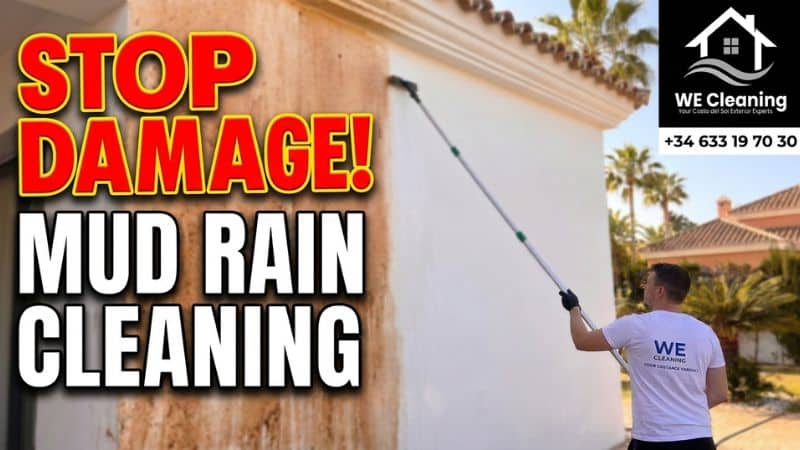
Waking up to find your Marbella villa covered in reddish-brown dust is very frustrating for any homeowner. Trying to wash this mud rain (Lluvia de Barro) off using regular cleaning methods can damage your home’s exterior finishes.
In this guide, we will clearly explain why this happens. We will look at the important differences between dry Calima and wet mud rain. We will also provide a step-by-step professional cleaning process to safely protect homes in Marbella.
Dry Dust vs. Mud Rain Explained
To maintain your property, it’s important to understand that airborne dust and mud from rain are two different issues. Each requires its own method of handling.
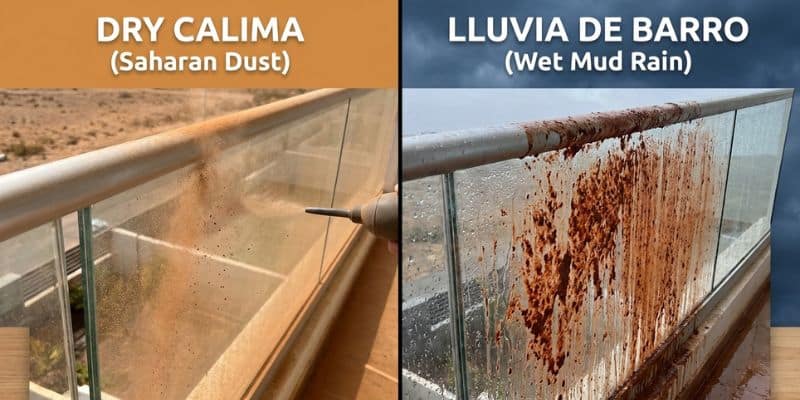
Dry Calima: Saharan Dust
Dry Calima refers to a weather condition where warm air carries fine dust particles from the Sahara Desert across the Mediterranean to Southern Spain. Spain’s meteorological agency, AEMET, notes that this phenomenon raises the level of solid PM10 particles in the air. In this dry state, the dust mainly consists of tiny bits of quartz, feldspar, and clay minerals. The dust settles onto surfaces due to gravity and static electricity. Since there is no liquid to hold it together, the dust stays loose and easy to remove with air blowing or gentle rinsing.
Lluvia de Barro: Wet Mud Rain
When it rains during a Saharan dust event, the cleaning process changes completely. Rainfall collects dust from the air in a process called wet deposition. This forms a liquid mixture known as lluvia de barro, or mud rain. The added moisture activates the clay and soluble calcium carbonates in the dust. This changes the dust’s physical state, turning it from a loose powder into a sticky coating.
Feature | Dry Calima (Dry Deposition) | Lluvia de Barro (Wet Deposition) |
State | Loose, airborne particulate | Liquid-mineral slurry |
Binding Mechanism | Electrostatic and gravity settling | Capillary absorption and chemical bonding |
Removal Difficulty | Low (Air or light rinse) | Extreme (Requires chemical rehydration) |
Why Mud Rain Ruins Exterior Surfaces
If you leave mud rain untreated or try to clean it the wrong way, it can create serious problems for your property. It can lead to structural damage and affect how your property looks.
The UV Baking Mechanism
The real risk to Costa del Sol properties happens just after a storm. When the strong Mediterranean sun (UV rays) hits the wet ground, it quickly evaporates the water.
This leaves behind iron oxides, clays, and mineral salts that harden into a solid crust. Instead of sitting loosely on buildings, this mineral layer bonds directly into the tiny pores of exterior walls, natural stone, and metal fixtures.
Scratch Risks on Glass & Paint
The immediate danger of Saharan dust comes from its mineral makeup. The particles of quartz and feldspar are rated 6 to 7 on the Mohs hardness scale, which means they are harder than many common building materials.
If you dry-wipe, brush, or dust surfaces while the mud is crusted, you will be dragging sharp edges across your property. This can cause permanent micro-scratches on anodized aluminum window frames, automotive clear coats, frameless glass curtains, and polished stone features.
Why Pressure Washing Fails on Mud
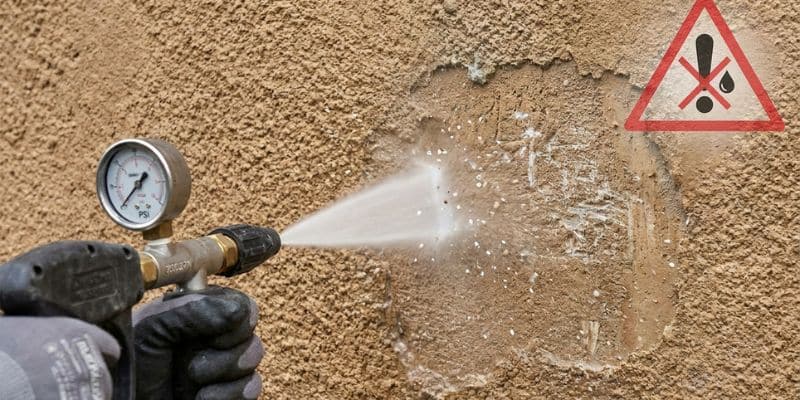
When dealing with tough dirt, many homeowners use powerful tools. However, using strong water pressure for cleaning after a Calima is a risky choice that can cause damage.
The Threat of Hydro-Abrasion
Using a high-pressure washer (operating above 1,500 PSI) directly on dried mineral crust can cause damage through a process called hydro-abrasion. The fast-moving water picks up loose quartz particles and shoots them forcefully into the surface below. Instead of cleaning the area, you end up turning the mud into a pressurized cutting tool that sands down the finish you want to clean.
Protecting Monocapa Façades
High-pressure washing is very risky for the textured, white monocapa (rendered stucco) facades often seen on villas in Marbella and Nueva Andalucía.
Using such high pressure on porous render can damage expansion joints and remove breathable masonry paint. The strong pressure can also push reddish iron-oxide particles deeper into the plaster, leaving permanent stains.
After a Calima in Costa del Sol, deep cleaning homes needs a gentler approach that focuses on the right chemistry to protect these delicate facades.
The Correct Mud Rain Cleaning Method
The soft-washing method uses chemicals to clean surfaces by allowing particles to loosen without relying on high pressure.
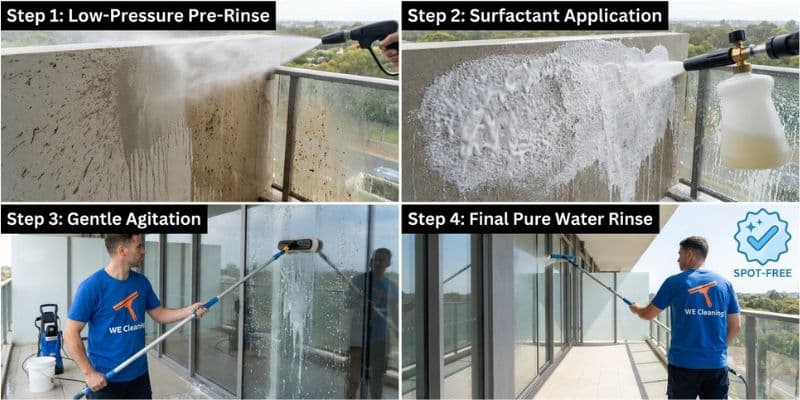
Step 1: Low-Pressure Pre-Rinse
The process starts with a strong, low-pressure rinse using a lot of water. The goal is to soak and break down the baked crust, beginning from the highest point of the property and moving downwards. This water flow helps wash away loose particles without scraping the surface.
Step 2: Surfactant Dwell Time
When the surface is wet, apply a special wetting agent. Let it sit for 5 to 10 minutes. This time helps the solution soak into the mud, reduce surface tension, and trap sharp quartz grit in a mixture. It’s important not to let this solution dry in the strong Andalusian sun. Use pH-neutral cleaners to avoid damaging delicate exterior materials during this soaking time.
Step 3: Scratch-Free Agitation
Only after the mud is fully mixed with water can you touch it. Technicians use special brushes with soft, feathered bristles to gently stir the mix. They must rinse these bristles with running water while using them; if not, the brush will collect quartz particles and become rough and abrasive.
Step 4: Final Pure Water Rinse
The procedure ends with a thorough final rinse to remove all the mineral slurry. For large, modern buildings, professional teams use water-fed poles that deliver 100% pure (demineralized) water. This method makes sure the surface dries completely clear, which prevents hard-water spots that regular tap water can leave behind.
Surface-Specific Marbella Protocols
To use this method, you need to make specific changes based on your property’s design and material weaknesses.
Glass Curtains & Balustrades
Frameless glass installations (cortinas de cristal) are common in Mediterranean outdoor spaces, but they can easily get scratched. It’s essential to avoid any contact that could cause damage. The clear rubber and silicone seals between the glass panes are also very sensitive.
If acidic dirt gets stuck in these joints, it can quickly damage the seals, leading to water leaks and discoloration. To clean balconies in Marbella coastal apartments properly, it is important to rinse these delicate joints with purified water.
Persianas & Exterior Awnings
Exterior roller shutters (persianas) and fabric canvas shades (toldos) collect a lot of dirt in their parts. To clean them properly, follow these exterior cleaning steps:
- Dry Preparation: Always use a vacuum to clean the side tracks of your persianas before using water. This prevents dirt from clogging the wall casings.
- Suspension Washing: Use foam to lift mud from the overlapping joints of the louvers. This keeps water from running down and staining the walls below.
- Moisture Control: Never roll up a fabric awning while it is still wet after cleaning. The trapped moisture can cause mildew and mold to grow in the fabric.
Porous Terracotta Patios
Traditional Andalusian barro cocido (terracotta) floor tiles are very porous, which makes them hard to maintain. Heavy rain can easily seep into unsealed terracotta. If mineral slurry collects and dries in the grout lines, it can lead to white stains and permanent red rust marks.
To clean these large patios safely, professionals use wide rotary surface cleaners that operate at a very low pressure. This method ensures a thorough clean without removing the joint sand.
Marbella Microclimate & Local Laws
To operate and maintain a property in Málaga, you need to understand local environmental factors and city rules.
Marine Salt and Mud Adhesion
Properties located right on the coast, like those along the Golden Mile or Los Monteros, face significant environmental risks. Airborne marine salt, known as salitre, pulls moisture from the humid coastal air.
When this salty spray mixes with dust from the Calima, it forms a corrosive mixture that speeds up rust and oxidation on metal railings, light fixtures, and structural hardware.
Navigating Drought Decrees
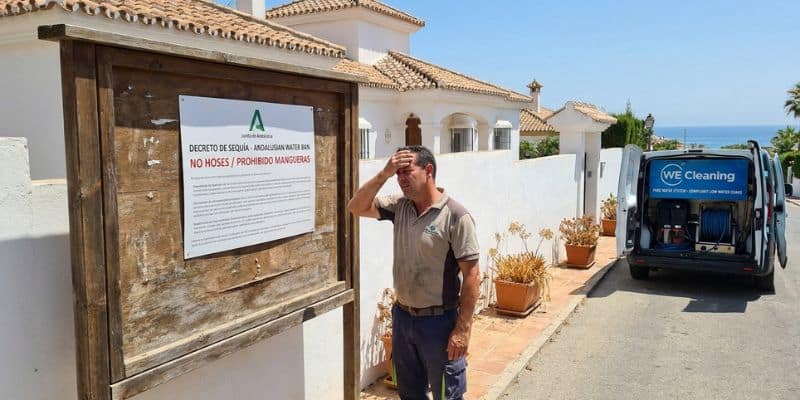
Property maintenance in the Costa del Sol must follow local environmental laws, especially during droughts when the Junta de Andalucía issues Andalusian water bans Decretos de Sequía.
During these times, using city water to wash terraces with garden hoses is banned and can lead to heavy fines. This makes it necessary and mandatory to use efficient cleaning methods that use less water, like pure-water poles and soft-washing equipment.
DIY vs Professional Exterior Clean
Homeowners can usually sweep away light, dry dust from their garden furniture. However, if the furniture is wet, it often needs special cleaning methods.

When to Call a Pro Exterior Team
You should review a comprehensive Marbella cleaning guide for property owners and consult a professional team when facing:
- Multi-story buildings: Cleaning tall areas using ladders on slippery terrace tiles can be dangerous. Professionals can safely clean from the ground using special poles.
- Severe discoloration: If your white render has taken on a reddish color, it needs special cleaning products instead of just scrubbing.
- Large glass surfaces: Cleaning big glass panels without streaks is difficult. Using commercial-grade deionized water helps achieve a clear finish.
- Silt buildup: Heavy mud can create sludge that blocks underground drainage systems. Proper cleaning involves carefully removing this silt rather than flushing it down terrace grates.
Protect Your Marbella Investment
Mud rain is not just dirt; it is a complex hazard that can cause damage. To clear a severe mud rain event, focus on chemical cleaning rather than using intensive mechanical methods. By using low-pressure techniques, you can protect your home’s surfaces and keep it looking good. To ensure your property stays valuable and safe, contact WE Cleaning for specialized exterior care suited to the Marbella climate.
FAQs About Mud Rain Property Care
Can I leave mud rain to wash off?
Relying on subsequent rain showers to clean your property is highly ineffective. Normal rainfall in Marbella is rarely heavy or persistent enough to completely flush baked mineral mud. Instead, light rain merely reactivates the top layer of the crust, dragging the dirty red silt further down your clean walls and windows to create deeper, more prominent streaks.
How soon should I remove Calima?
Timing is critical. You should wait until the specific Calima weather front has completely passed the region by checking local meteorological forecasts. However, you must initiate the cleaning process immediately afterward. Allowing the mud to sit for weeks under intense UV exposure gives the iron and minerals time to bake permanently into porous surfaces.
Can I use dish soap on mud rain?
While household dish soap does act as a surfactant, it is formulated for kitchen grease, not mineral dust. It frequently leaves behind a sticky, invisible film on exterior glass that aggressively attracts new dust the next day. Furthermore, the varying pH levels of kitchen soaps can degrade specialized sealants on window frames. Recommend professional, pH-neutral exterior formulas instead.