
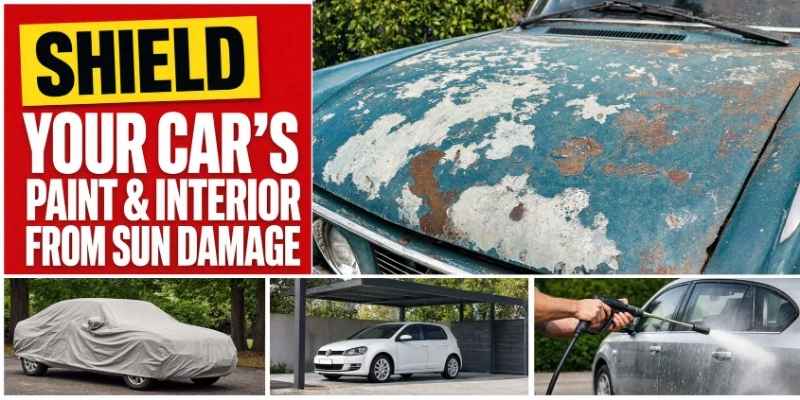
Living along the Costa del Sol means enjoying more than 320 sunny days each year. However, this climate can seriously harm your vehicle. The strong ultraviolet (UV) rays and heat in coastal Málaga and Marbella can damage your car’s paint long before any mechanical problems appear.
To protect your car’s paint from sun damage and keep the interior materials in good shape, you need more than a regular car wash. You need a specific plan designed for this climate.
In this guide, we explain how sunlight can cause damage, compare long-lasting paint sealants, detail how to care for leather, and provide practical tips for parking near the coast to help keep your car looking like new.
How Spanish UV Exposure Damages Your Vehicle
Modern car finishes are designed to handle tough conditions. However, the strong sunlight in Southern Spain can harm your vehicle. This damage comes from two main factors: ultraviolet (UV) light and extreme heat.
When your car is in direct sunlight, these factors work together to break down materials, fade paint, and dry out the interior.
Intense Sunlight in the Mediterranean:
- UV Light Absorption: This leads to free radicals forming, which break down the clear coat on your car’s paint. Over time, this causes oxidation and peeling.
- Heat Build-up: When your car’s cabin traps heat, it causes extreme temperatures that evaporate plasticizers in materials, leading to dashboard cracks and shrinking leather.
In Spain, solar noon happens around 14:20 CEST during summer. This results in about five hours of extreme heat and radiation each afternoon, which speeds up wear and tear much faster than in northern Europe.
How Clear Coat and Paint Fade
A car’s paint has several layers: a primer, a color basecoat, and a clear coat. The clear coat, which protects the color, is made from acrylic or polyurethane resin.
Ultraviolet light is divided into UVA and UVB wavelengths:
- UVB rays: These hit the surface and cause quick oxidation.
- UVA rays: These penetrate deeper and cause photo-oxidation.
During photo-oxidation, sunlight breaks the molecular chains in the clear coat. This process creates tiny cracks on surfaces like the hood, roof, and trunk. When humidity and sea mist get into these cracks, the clear coat loses its shine, turns cloudy, and eventually peels off.
According to AEMET solar radiation metrics, UV Index levels in Southern Spain reach 8 to 11+ (Very High to Extreme) from May to September. At these levels, unprotected clear coats can lose gloss in just one season.
Heat Damage to Interior Materials
While the exterior paint absorbs sunlight, the inside of the car heats up even more. Standard car windows let sunlight in, but the cabin traps this heat. Cars parked in direct sunlight can reach temperatures above 60°C inside, and dark dashboard surfaces can exceed 80°C.
This heat can quickly damage cabin materials:
- Polyvinyl Chloride (PVC) & Vinyl: Dashboards have plasticizers that keep them flexible. High heat causes these plasticizers to escape, which makes dashboard plasticizers outgas and fade, leaving it with oily and foggy residue. This can also lead to cracks.
- Automotive Leather: Leather needs moisture and oils to stay soft. Heat removes these, causing the leather to shrink, harden, and crack.
- EPDM Rubber Trim & Seals: Weatherstripping around doors and sunroofs hardens in high heat. This makes it lose its seal and can create wind noise inside the cabin.
Essential Methods to Protect Exterior Car Paint
To protect your car’s paint from strong Mediterranean sun, you need a strong barrier over the clear coat. The type of protection you choose depends on how often you park outside, your budget, and how much upkeep you want to do.
Exposed Vehicle Ecosystem:
Exterior Surfaces | Interior Surfaces |
Clear Coat & Color Basecoat | Polyurethane Dashboard |
Horizontal Panels (Bonnet, Roof, Boot) | Instrument Cluster & Touchscreens |
Polycarbonate Headlight Lenses | Leather & Textile Upholstery |
EPDM Rubber Window Seals | Steering Wheel Rim |
Unpainted Textured Plastic Trim | Door Cards & Center Console |
Ceramic Coatings vs. Traditional Waxing Protection
Car care products provide different levels of heat resistance, chemical strength, and UV protection.
Protective Barrier Type | Primary Chemical Composition | UV & Heat Threshold | Average Durability in Andalusia | Best Use Case |
Carnauba Wax | Natural palm wax organic esters | Low (Melts around 80°C–86°C) | 3 to 6 weeks | Garage-kept vehicles, show cars |
Synthetic Polymer Sealant | Cross-linking synthetic polymers | Medium (Resists heat up to 120°C) | 3 to 5 months | Daily drivers seeking affordable protection |
Nano-Ceramic Coating | Silicon Dioxide (SiO2) / Silicon Carbide (SiC) | High (Resists heat over 600°C) | 2 to 5 years | Vehicles parked outdoors in high-UV areas |
Paint Protection Film (PPF) | Thermoplastic Polyurethane (TPU) | Extreme (Physical & UV barrier) | 5 to 10 years | High-value vehicles, highway commuting protection |
✅ Carnauba Waxes: Organic waxes give a deep shine but break down quickly in the hot summer sun in Southern Spain. High temperatures can make these wax layers soften and disappear within weeks.
✅ Synthetic Sealants: These man-made formulas bond well to your car’s clear coat. They provide better UV protection and heat resistance than natural wax.
✅ Nano-Ceramic Coatings: Ceramic treatments bond with the clear coat to create a strong, glass-like surface. This inorganic layer withstands extreme heat, repels dirt and water, and includes UV blockers to prevent damage from the sun.
For car owners who want to keep their paint looking good for a long time, professional car exterior detailing can ensure surfaces are cleaned and polished before applying ceramic protection.
Safe Washing Routines to Prevent Thermal Shock
Washing your car in direct sunlight and high temperatures can damage the clear coat. During midday, body panels can get hotter than 60°C. If you spray cold water on hot metal, it can cause thermal shock, leading to micro-cracks in the clear coat.
Also, water in coastal areas like Málaga has high levels of minerals (such as calcium and magnesium). When hot paint meets tap water, it can evaporate quickly, leaving behind mineral spots that stain the clear coat.
Here’s a safe washing routine to protect your car’s paint:
- Wash in the Early Morning or Late Evening: Never wash your car when the paint feels warm. Try to work in the shade.
- Cool the Surface Gently: If you need to rinse, use low-pressure water to gradually cool the body panels with demineralized or softened water.
- Use a Touchless Two-Bucket Method: Fill one bucket with pH-neutral, UV-protecting car shampoo and the other with clean rinse water. Use a soft microfiber wash mitt to avoid scratching the clear coat.
- Pre-Rinse Heavy Dust: During dusty weather, fine particles can cover your car. Don’t wipe them off dry. Always use a contactless pre-rinse with snow foam to remove dust safely.
- Dry Immediately with Microfiber Towels: Don’t let rinse water dry on its own in the sun. Use soft, absorbent microfiber towels to remove water drops before mineral deposits can bake into the finish, preventing hard water spot calcification.
How to Protect Your Vehicle's Interior
To keep your vehicle’s interior in good shape, use sunshades and regularly condition surfaces, especially in hot weather.
Benefits of Reflective Sunshades and Thermal Window Film
Blocking radiant heat before it reaches your car’s windows is the best way to lower the temperature inside.
- Custom-Fit Reflective Sunshades: Unlike generic sunshades that can slip and let light in, custom sunshades fit your car’s windows perfectly. They can reflect up to 99% of incoming heat and lower dashboard temperatures by up to 30°C, helping keep the inside air cooler.
- IR-Rejection Window Tinting: Standard privacy glass may darken windows, but it doesn’t stop heat from infrared rays. High-quality ceramic window films can block up to 90% of infrared heat and 99% of UV rays without needing dark tints.
Spanish Window Tinting Regulations (ITV Rules)
When applying window films in Spain, you must comply with strict national Inspección Técnica de Vehículos (ITV) regulations:
- Rear Side Windows & Rear Windscreen: You can tint these windows as long as the installer provides an official approval certificate and the film has clear manufacturer labels.
- Front Side Windows & Front Windscreen: Tinting the front side windows or windscreen is illegal for standard passenger vehicles in Spain, no matter how clear the film is. Doing so will lead to an immediate inspection failure and possible fines.
Conditioning Leather and Fabric to Prevent Cracking
Heat can dry out leather and fade synthetic fabrics. To keep these materials soft and flexible, it’s important to restore their moisture.
Interior Preservation Checklist:
Vacuum Dusting | pH-Balanced Clean | UV Conditioning |
Remove fine dust particles from seams & stitching | Lift oils & perspiration without harsh solvents | Apply non-greasy matte UV-blocking protectant |
Follow this routine for maintaining your car’s interior:
- Deep Clean First: Use a soft horsehair brush and a gentle pH-balanced cleaner to remove dirt, sweat, and oils from leather seats.
- Apply Nourishing Conditioners: Treat real leather seats with a special conditioner that has natural oils and UV protection every 6 to 8 weeks in summer.
- Avoid Petroleum Distillates: Don’t use cheap, shiny dashboard sprays that contain petroleum or heavy silicone oils. These products can worsen heat, attract dust, and leave a greasy shine on the dashboard that can reflect onto the windshield. Instead, choose matte protectants made for automotive vinyl and plastics.
If your car’s interior is dry and neglected, consider professional car interior cleaning services to safely remove built-up grime and nourish dry materials. This will help prevent leather car seats from cracking.
Local Parking and Storage Advice for Costa del Sol Car Owners
Where you park your vehicle every day in places like Fuengirola, Estepona, and San Pedro de Alcántara can affect how quickly your car’s paint and interior materials wear out.
Managing Heat Build-Up in Coastal Málaga Areas
When parking along the coast, vehicle owners face some unique challenges:
✅ Direct Sunlight vs. Tree Shade:
Parking under pine trees or bougainvillea can help keep your car cool but can also damage the paint with tree resin and bird droppings. When bird droppings sit on hot paint under the sun, they can harm the clear coat. If you choose to park under trees, clean any deposits right away using a detail spray and a soft microfiber cloth.
✅ Coastal Salt Breeze (Salitre):
If you park near beachfront areas, like the Golden Mile in Marbella or coastal roads in Torremolinos, your car will be exposed to sea salt. Salt attracts moisture, which can speed up damage to your car’s paint and metal. To avoid salt damage, rinse your car regularly to remove salt buildup, taking key steps toward protecting your vehicle from corrosive beach salt air and protect it from the beach air.
✅ Long-Term Airport Parking:
If you leave your vehicle in open long-term parking at Málaga-Costa del Sol Airport (AGP) for weeks, it will face direct sun, bird droppings, and dust. Before leaving a car uncovered for a long time, apply a durable sealant or ceramic coating, or use a custom-fit, breathable car cover to protect it from the sun and wind.
Preserving Your Vehicle Value Under the Mediterranean Sun
To maintain a vehicle on the Costa del Sol, you need to actively protect it from harsh conditions. Intense UV rays, high temperatures, dust, and sea salt can damage your car.
Use protective sealants, custom reflective sunshades, and nourish interior materials. Follow safe washing routines to prevent paint fading and keep plastics from cracking.
These steps help maintain your vehicle’s appearance and resale value. For the best results, combine daily care with professional detailing from WE Cleaning to protect against Southern Spain’s tough summer climate.
FAQs About Vehicle Sun Protection in Spain
Can intense UV rays permanently ruin my car's clear coat?
Yes. Prolonged UV exposure can break down the clear coat, causing oxidation, cloudiness, and peeling. Light surface oxidation can be polished away, but if the clear coat is peeling, that means the protective layer has failed. In that case, the only solution is a full professional respray.
How often should wax be applied in Andalusia summers?
Natural carnauba waxes break down quickly in intense heat and usually last only 3 to 4 weeks in the summer. Synthetic polymer sealants last longer and should be reapplied every 3 to 4 months. If your car stays parked outside, consider using a nano-ceramic coating for lasting protection that won’t melt or wash away in extreme temperatures.
Do ceramic coatings prevent interior dashboard fading?
No. Exterior ceramic coatings are designed for painted metal, clear coats, glass, and exterior plastic only. They cannot be used on soft materials like leather, vinyl, or foam in the interior. To protect your dashboard from fading and heat damage, use special interior protectants with UV blockers and custom-fit reflective sunshades.
What is the best way to cool a sun-baked interior fast?
To cool down a hot cabin quickly, do not immediately turn the air conditioning to maximum with the windows closed. Instead:
- Roll down the front passenger-side window.
- Open and close the driver’s door firmly 5 to 6 times. This pushes hot air out through the open window and helps lower the temperature.
- Turn on the air conditioner with fresh outside air for the first minute to blow out hot air, then switch to recirculation.


