
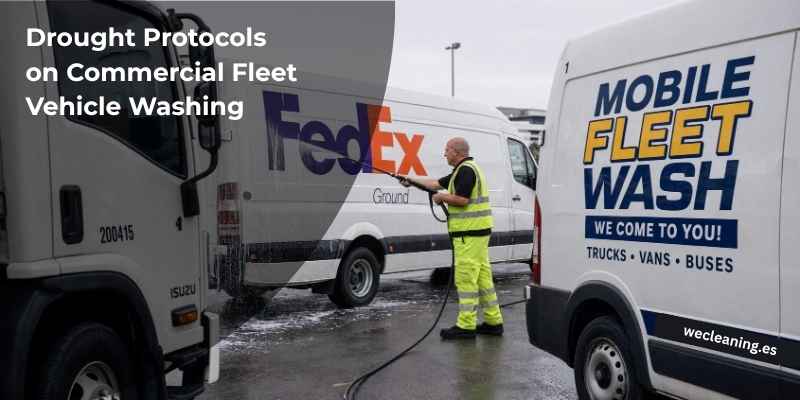
Commercial fleet managers in Málaga and the Costa del Sol are under pressure as Southern Spain imposes strict water restrictions to deal with ongoing drought.
However, you can keep your fleet clean and professional without facing heavy fines or increasing your budget if you understand the rules and use eco-friendly cleaning methods.
To navigate drought protocols for commercial fleets, you need to know the local regulations, compliant cleaning options, and effective management strategies that suit the local environment.
This guide explains how regional rules affect transport operations, how to clean vehicle exteriors safely, and how to stay compliant without compromising fleet hygiene.
Understanding Andalusia's Fleet Water Regulations
Managing a commercial fleet in Southern Spain requires knowing the rules about water use. In Andalusia, water management deals with two main issues: a natural drought, which means not enough rain over a long time, and water scarcity, which happens when there isn’t enough water in reservoirs or groundwater to meet demand.
To protect the water supply in Málaga province and the Costa del Sol Occidental, the regional government and local water companies, like Acosol and Hidralia, have specific rules for businesses and individuals.
Key Measures of the Regional Drought Decree
Regional drought management in Southern Spain operates under the framework set by the regional government. Under Decreto 178/2021 published in the Boletín Oficial de la Junta de Andalucía (BOJA), emergency drought rules activate mandatory water-saving protocols whenever hydrological systems reach severe or emergency scarcity levels.
Local governments then create their own rules (called bandos) that affect local businesses:
- No Drinking Water for Washing: You cannot use drinking water from municipal supplies to wash vehicles unless you are in an authorized commercial facility.
- Prohibited Direct Connections: You cannot connect hoses or high-pressure washers directly to municipal drinking water taps for washing vehicles.
- Local Monitoring: Local police and environmental inspectors in places like Málaga, Marbella, Mijas, and Estepona check businesses and public areas to ensure compliance with these rules.
- Priority for Essential Uses: Local water systems prioritize home use and healthcare services over commercial vehicle washing.
Commercial vs Private Vehicle Washing Rules
The law clearly differentiates between washing vehicles at home and at licensed commercial facilities. Washing vehicles on public streets, in driveways, or at business properties using municipal water is illegal under current drought restrictions.
Licensed commercial washing facilities can operate if they use approved low-water technology or closed-loop water recycling systems. These businesses handle wastewater properly, using much less fresh water per vehicle, which allows fleet operators to meet legal standards.
Operational Challenges for Local Fleet Operators
Water restrictions create specific operational challenges for vehicle owners, logistics managers, and transport operators in the Costa del Sol.
Maintaining Brand Image During Water Shortages
For chauffeur services around Málaga Airport, luxury transfers on Marbella’s Golden Mile, and rental car companies for tourists, the appearance of vehicles reflects brand quality. A delivery van or passenger car that is dirty can signal carelessness to clients and hotel partners.
For example, an airport transfer service between Málaga-Costa del Sol Airport and hotels in Puerto Banús or Estepona risks losing customer trust if it arrives with dusty windows and dirty door handles.
This can hurt premium pricing and damage the image. Fleet operators need to balance water conservation with keeping their vehicles clean.
Financial Costs of Non-Compliance Penalties
Ignoring local water rules can lead to serious financial and legal issues for businesses:
- Heavy Municipal Fines: Local regulations penalize unauthorized use of drinking water for washing vehicles. Fines can range from hundreds to thousands of euros per vehicle.
- Operational Downtime: Fines and notices disrupt daily schedules and waste administrative time.
- Increased Surveillance: Companies caught breaking water rules may face more frequent inspections from local water authorities.
Vehicle Damage from Dust and Sand
The Costa del Sol often experiences Calima, which brings fine, sandy dust from the Sahara that settles on vehicles. When this dust mixes with salt air along the A-7 and AP-7 highways, it creates a harmful layer on vehicles.
If not cleaned due to water washing delays, these tiny particles can damage the outer layer of the car’s paint. Long exposure to the hot Mediterranean sun can bake the dust into the finish, leading to etching, staining, and rust.
Operators must focus on protecting vehicle exteriors during Calima episodes to avoid permanent damage while staying within local water rules.
Compliant Cleaning Solutions for Commercial Fleets
Keeping your fleet clean is important for staying compliant. Commercial fleet operators can use eco-friendly washing methods that respect local water regulations.
Eco-Friendly Waterless Vehicle Detail Techniques
Waterless cleaning is a great option for fleets that are lightly or moderately dirty. This method uses special biodegradable products that are sprayed onto the vehicle surface.
- Encapsulation Technology: Advanced polymers surround dirt particles and remove them without scratching the paint.
- Microfiber Lift: High-quality microfiber towels clean off the dirt without using any rinse water.
- Zero Runoff: Since no standing water is created, waterless detailing generates no waste. This makes it ideal for indoor parking lots and closed business yards.
Using professional waterless vehicle cleaning helps keep vans and company cars looking good without relying on tap water.
Commercial Closed-Loop Recycling Wash Systems
For large fleets, like city service vehicles or public buses, waterless cleaning might not remove heavy mud. In these cases, closed-loop wash systems offer the needed cleaning power.
- Water Reclamation: Wash water goes into underground tanks instead of storm sewers.
- Oil & Solid Separation: Systems remove heavy solids and oils from the water.
- Biological & Physical Filtration: Multi-stage filters clean and purify the reclaimed water.
- Recirculation: The cleaned water goes back into the washing system, recycling over 80% of the water used.
Fleet operators using these recycling wash solutions meet all requirements while keeping vehicles clean and quickly available.
Mobile Eco-Wash Services for Business Yards
Outsourcing fleet maintenance to mobile wash providers offers flexibility. These teams bring their cleaning equipment directly to your location in Marbella, Fuengirola, Mijas, or Málaga.
These mobile units use efficient steam cleaners, low-flow pressure washers with non-potable water, or waterless polymer methods. Since the provider manages water sourcing and waste control, your business saves on costly wash systems while ensuring compliance.
Using eco-friendly mobile detailing services keeps your vehicles clean without disrupting your delivery schedules.
Strategic Fleet Management During Droughts
Using a clear fleet care strategy helps your business keep vehicles looking good, control costs, and avoid legal issues.
Fleet Cleaning Strategy Comparison
The table below compares different ways to clean vehicles based on water use, legal requirements during droughts, and practicality.
Washing Method | Water Consumption per Vehicle | Legal Status under Potable Water Restrictions | Primary Operational Advantage |
Traditional Hose / Pressure Washer (Tap) | High (150–300 Liters) | Strictly prohibited from using agua potable | Low initial equipment cost |
Commercial Closed-Loop Wash Bay | Low (20–40 Liters fresh makeup) | Compliant (Authorized facilities) | Rapid turnaround for heavy soiling |
Mobile Waterless Detailing | Near Zero (<1 Liter solution) | Fully Compliant (Zero discharge) | Highly portable, zero infrastructure needed |
Low-Flow Steam Detailing | Very Low (3–5 Liters) | Compliant (Controlled runoff) | Deep cleans interiors and exterior engine bays |
Drought Action Plan for Fleet Managers
Fleet managers should follow this step-by-step plan to handle car washing restrictions in Andalusia effectively:
- Check Water Usage: Find out how much and where your company washes its vehicles.
- Confirm Vendor Approvals: Make sure that washing vendors have the proper permits and use recycling or waterless methods.
- Update Driver Instructions: Tell drivers they cannot wash vehicles at company yards or homes with regular hoses.
- Change Washing Schedule: Move from set washing times to cleaning based on inspections, focusing on vehicles seen by customers and those that get very dirty.
- Keep Compliance Records: Save all receipts, vendor contracts, and water use certifications to show municipal inspectors during audits.
Securing Your Fleet Compliance in Costa del Sol
To follow water restrictions, fleet operators should take steps to balance company image with legal requirements. Switching from traditional car washing methods to eco-friendly waterless options, closed-loop recycling, or professional mobile detailing can help protect your image while conserving water.
Reviewing your fleet maintenance process can help reduce risks of non-compliance. Working with certified, water-efficient detailing specialists like WE Cleaning will keep your business vehicles clean, ready for the road, and compliant with all environmental rules in Andalusia.
FAQs About Fleet Washing Under Drought Rules
Can fleets use tap water for washing in Málaga?
No. In Málaga province, local rules forbid using drinking water from the public supply for washing vehicles that are not essential. Commercial fleets must use authorized washing facilities with water recycling systems or choose non-potable, low-impact cleaning methods.
Are mobile waterless cleaning services legal?
Yes. Eco-friendly waterless cleaning methods use biodegradable sprays and microfiber towels, which do not create wastewater and do not use municipal tap water. These methods follow Andalusian drought rules.
How often should commercial fleets clean in a drought?
Cleaning schedules should depend on the vehicle’s purpose. Vehicles that interact with customers, like taxis and luxury shuttles, need regular spot-cleaning on windows and handles. Utility vehicles can be cleaned less frequently, based on inspection needs, to save resources.
What proof of compliance do inspectors require?
Inspectors usually ask for proof of water sources during audits. This can include invoices from licensed washing facilities, receipts from mobile cleaning services, or documents showing the operation of an on-site water recycling system.


