How to Get Sunscreen and Body Oil Stains Out of Car Seats
Car & Vehicle Care
wecleaning
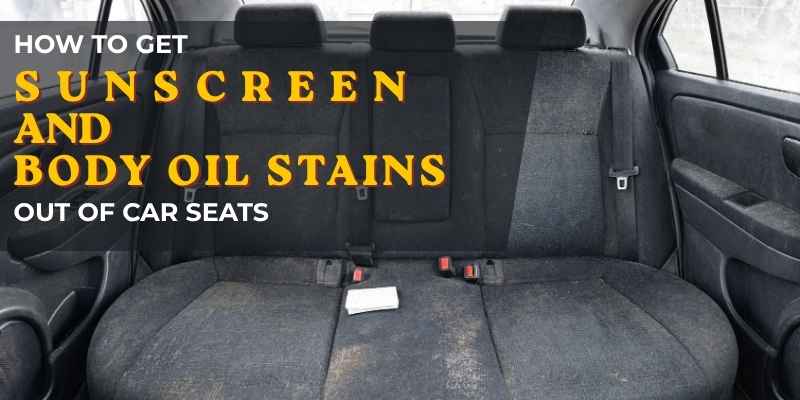
A day at the beach shouldn’t leave your car seats with white sunscreen marks and greasy body oil stains. In places like Costa del Sol, where sunscreen, tanning products, swimwear, and hot car interiors mix, these stains are common and can be tough to clean.
The good news is you can often remove sunscreen and body oil stains from car seats without harming the upholstery. First, identify the type of seat material. Then, use a gentle cleaning method.
This guide will cover how to clean stains from fabric, leather, and vinyl seats, which products to avoid, how to tackle stubborn stains, and tips to prevent sunscreen transfer during future beach trips.
Sunscreen and tanning products are designed to resist water, sweat, and friction. While this helps your skin, it makes stains on car seats and leather very hard to remove. To get rid of these marks safely, it’s helpful to know why they stick so well.
The Chemistry of Sunscreen and Vehicle Upholstery
Modern sunscreens use a mix of UV-filtering chemicals, like avobenzone and octocrylene, as well as mineral blockers like zinc oxide and titanium dioxide. These active ingredients are mixed into oily bases that include coconut oil, monoi oil, silicones, and other skin-friendly ingredients.
Unlike spills like soda or coffee that can dissolve in water, the oils in sunscreen do not dissolve easily. When sunscreen gets on car upholstery, the minerals stick deeply into fabric and leather. The oils also penetrate deeply into synthetic fibers and leather. Wiping a fresh stain with just a wet cloth often just spreads the oil around instead of removing it.
Why Spanish Sun Makes Oil Stains Worse
Cars parked in sunny coastal areas, like Marbella or Fuengirola, get very hot inside. Sunlight creates a greenhouse effect that raises the vehicle interior temperature very quickly. On a hot summer day, the inside of a car can reach over 60°C.
Why Spanish Sun Makes Oil Stains Worse
This heat makes the oils in sunscreen melt, causing them to sink deeper into the seats and leather. At the same time, UV radiation can break down some of the UV filters, turning light marks into hard, yellowish stains.
Research fromRACE vehicle maintenance studies shows that high temperatures can speed up the damage to protective coatings inside cars. This means it’s important to clean any stains right away using the right methods.
Removing Stains from Fabric and Cloth Seats
Fabric seats made of woven polyester or nylon can absorb stains easily. When sunscreen spills onto these seats, the oily liquid soaks into the fabric and the foam underneath.
Immediate Blotting and Pre-Treatment
Act quickly when you notice a fresh oil stain on cloth seats. Your goal is to soak up the oil before it goes deeper into the cushion.
Blot, Never Rub: Use a dry, clean microfiber cloth (70% polyester and 30% polyamide blend). Press it firmly on the stain. Avoid wiping or scrubbing; this can push the grease deeper into the fabric.
Apply an Absorbent Powder: Sprinkle cornstarch or baking soda generously on the stain. These powders will absorb the oil from the top layer of fabric.
Allow Dwell Time: Let the powder sit for 15 to 20 minutes.
Vacuum the Residue: Use a vacuum cleaner with a soft brush attachment to remove the powder without damaging the fabric.
Safe DIY Cleaning Solutions for Fabric
After soaking up the oils, use a cleaner to break down the remaining greasy residue. This cleaner will help lift the oil from the fabric.
Ingredients Needed:
2 cups of warm distilled water (tap water contains minerals that leave watermarks)
1 tablespoon of mild liquid dish soap with strong grease-cutting properties
1 tablespoon of distilled white vinegar (1:4 ratio with water to break down mineral casts)
Application Protocol:
Mix the solution until it has light foam.
Dip a soft-bristle detailing brush into the foam; don’t soak the brush.
Gently work the foam into the stain using circular motions.
Press a dry microfiber towel on the stain to soak up the soap and oil.
Wipe the area with a second damp microfiber towel to remove any remaining soap.
Deep Extraction for Set-In Oil Marks
If sunscreen has dried on the seats, surface cleaning may not be enough. Dried oils bond tightly to the fabric, and scrubbing can damage it. For old oil stains, use low-moisture hot-water extraction or special citrus-based cleaners.
These products can break down the oils without harming the fabric. Caution is important when using steam cleaners, as too much moisture can lead to mold and odors.
If DIY cleaning doesn’t work, consider professional car upholstery cleaning. This method uses powerful equipment to inject heated cleaning solution and vacuum it out, keeping the foam dry and safe.
Cleaning Sunscreen from Leather and Vinyl Seats
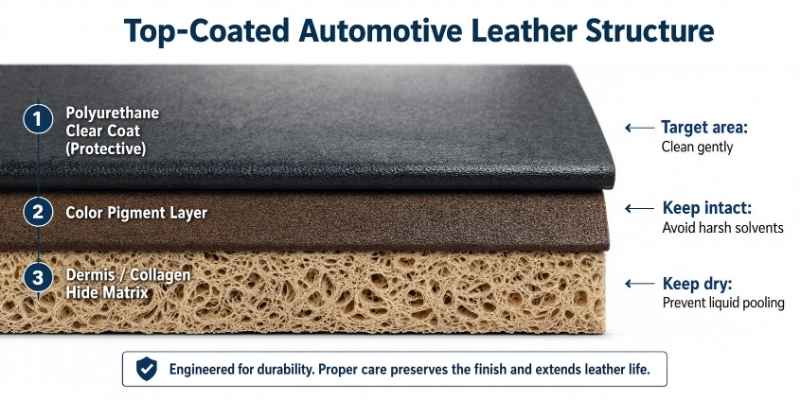
Automotive leather and synthetic materials, like vinyl and faux leather, have a protective coating on them. To clean sunscreen off these surfaces, you need to remove greasy residue without damaging the clear coat.
Cleaning Sunscreen from Leather and Vinyl Seats
Cleaning Leather Without Drying It Out
Using strong household cleaners can remove essential moisture from leather, making it prone to cracking in heat.
✅ Steps for Cleaning Smooth Leather and Vinyl:
Choose a pH-neutral automotive leather cleaner or mix a few drops of mild Castile soap with warm distilled water.
Apply the cleaning solution to a soft horsehair detailing brush. Don’t spray the cleaner directly onto the seats.
Lightly scrub the area using a cross-hatch motion (up and down, then side to side). Let it sit for 60 seconds to lift the sunscreen.
Wipe away the foam with a plush microfiber towel.
✅ Cleaning Perforated Heated/Cooled Seats:
Perforated leather seats have small vents that connect to heating elements. Spraying cleaner directly here can cause wetness to build up inside. Always use a foaming dispenser, apply foam lightly to your brush, and vacuum the holes right after cleaning.
Conditioning Leather After Stain Removal
Cleaning removes oil but also makes the leather drier. To avoid damage from sunlight, condition the leather after it dries. Use a water-based, UV-blocking leather conditioner with a microfiber applicator pad. Spread the cream evenly to restore flexibility and protect against future stains.
To preserve your vehicle interior over time, take steps toprevent leather car seats from cracking in summer by maintaining a regular conditioning schedule every four to six weeks throughout the sunny season.
What Not to Use on Sunscreen Upholstery Stains
Car owners often try strong household cleaners to remove stubborn white marks or greasy spots. However, many common home remedies can permanently damage your car’s interior.
Cleaning Agent / Tool
Intended Use Mistake
Primary Damage Mechanism
Resulting Damage
Melamine Foam (Magic Erasers)
Used to scrub white chalky streaks off leather
Acts as a 3,000-grit micro-abrasive sandpaper
Sands off polyurethane clear coat and strips underlying dye
Undiluted Household Bleach
Applied to lighten discolored fabric seats
Chemical oxidation and high alkalinity
Irreversible pigment loss and rapid fiber degradation
Acetone / Nail Polish Remover
Used to dissolve sticky tanning oil buildup
Potent organic solvent action
Instantly melts synthetic vinyl and dissolves leather topcoats
Neat Isopropyl Alcohol
Rubbed over leather to cut through grease
Rapid solvent drying and pH imbalance
Strips protective coatings, causing leather to flake and crack
Stiff Wire / Metal Brushes
Used to scrub dried sunscreen out of cloth weaves
Severe mechanical friction
Frays textile weaves, creates pilling, and tears leather grain
When to Get Professional Upholstery Cleaning
You can handle minor sunscreen stains at home if you act quickly and use safe methods. However, some situations need a professional’s help:
Dark Oil Rings on Perforated Leather: This happens when tanning oils get into seat ventilation holes and soak into the foam underneath.
Avobenzone Discoloration on Light Leather: You may see yellow or rust-colored stains on light-colored leather from UV filters that have oxidized.
Alcantara and Microsuede Upholstery: These synthetic materials can become matted, hard, and lose their softness if cleaned with regular liquid cleaners or improper techniques.
Persistent Wick-Back Stains: This is when sunscreen rings keep appearing on fabric seats after cleaning as the cushion dries.
Professional cleaners use special steam extraction tools, tannin and rust removers, and pH-balanced micellar formulas. If your car has severe stains or needs routine cleaning after summer, a thoroughinterior car cleaning can improve hygiene, remove trapped residues, and protect your surfaces.
Preventing Sunscreen Stains on Beach Trips
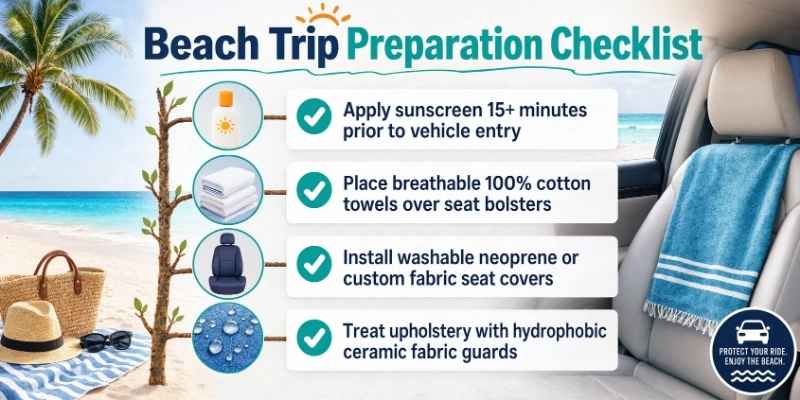
To protect your vehicle’s interior from body oils and sunscreen, take these steps before you head to the beach:
Preventing Sunscreen Stains on Beach Trips
Allow Absorption Time: Put on sunscreen at least 15 to 20 minutes before getting into your car. This helps it soak into your skin instead of sitting on the surface.
Use Breathable Towel Barriers: Keep 100% cotton beach towels in your car. Spread them over your seats before driving back from beach locations like Puerto Banús, San Pedro de Alcántara, or Mijas Costa.
Install Custom Seat Covers: If you visit the beach often, use washable neoprene or heavy-duty cotton seat covers during the summer.
Apply Protective Coatings: Use hydrophobic ceramic fabric sealants on cloth upholstery and UV-blocking conditioners on leather before the beach season starts.
Sunscreen and tanning oils are common in summer, but they don’t have to ruin your car’s interior.
Act quickly, use the right cleaning solutions for your materials, and avoid harsh tools to safely remove tough stains from both fabric and leather seats.
If regular cleaning methods aren’t enough to remove stubborn sunscreen marks or oil stains, consider professional mobile detailing.
📢 WE Cleaning offers expert services, including interior steam extraction and leather restoration, throughout the Costa del Sol—from Málaga and Torremolinos to Marbella and Estepona. They can restore your vehicle’s interior to like-new condition right at your home.
FAQs About Removing Car Seat Stains
Does Vinegar Remove Sunscreen from Car Seats?
Yes, you can use a mild solution of distilled white vinegar mixed with warm water (1 part vinegar to 4 parts water) to help remove mineral sunscreen stains (like zinc oxide and titanium dioxide) from fabric seats.
It works best when you add some grease-cutting dish soap. However, never use pure vinegar on leather or vinyl, as it can damage protective coatings over time.
Will Baking Soda Discolor Leather Upholstery?
Dry baking soda does not chemically discolor leather, but using it as a scrub can scratch the surface. The baking soda crystals are rough, which can dull the finish of smooth leather.
Also, fine baking soda powder can clog small holes in ventilated leather seats, making it hard to clean without a powerful vacuum.
How Do You Treat White Marks on Vinyl Seats?
White marks on vinyl surfaces usually come from mineral substances like zinc oxide getting stuck in the texture. To remove them, dampen a soft microfiber cloth with warm water and a few drops of pH-neutral soap.
Gently rub the area in circular motions to break down the mineral film, then wipe it with a clean, dry microfiber cloth.
Why Do Sunscreen Stains Reappear After Drying?
Sunscreen stains can come back on fabric seats due to the “wick-back effect.” When sunscreen seeps into the foam cushion under the fabric, just cleaning the surface won’t fully remove the oil.
As the seat dries, the oil can rise back to the top, leaving a visible mark. To fully get rid of the oil, deep low-moisture extraction is needed.